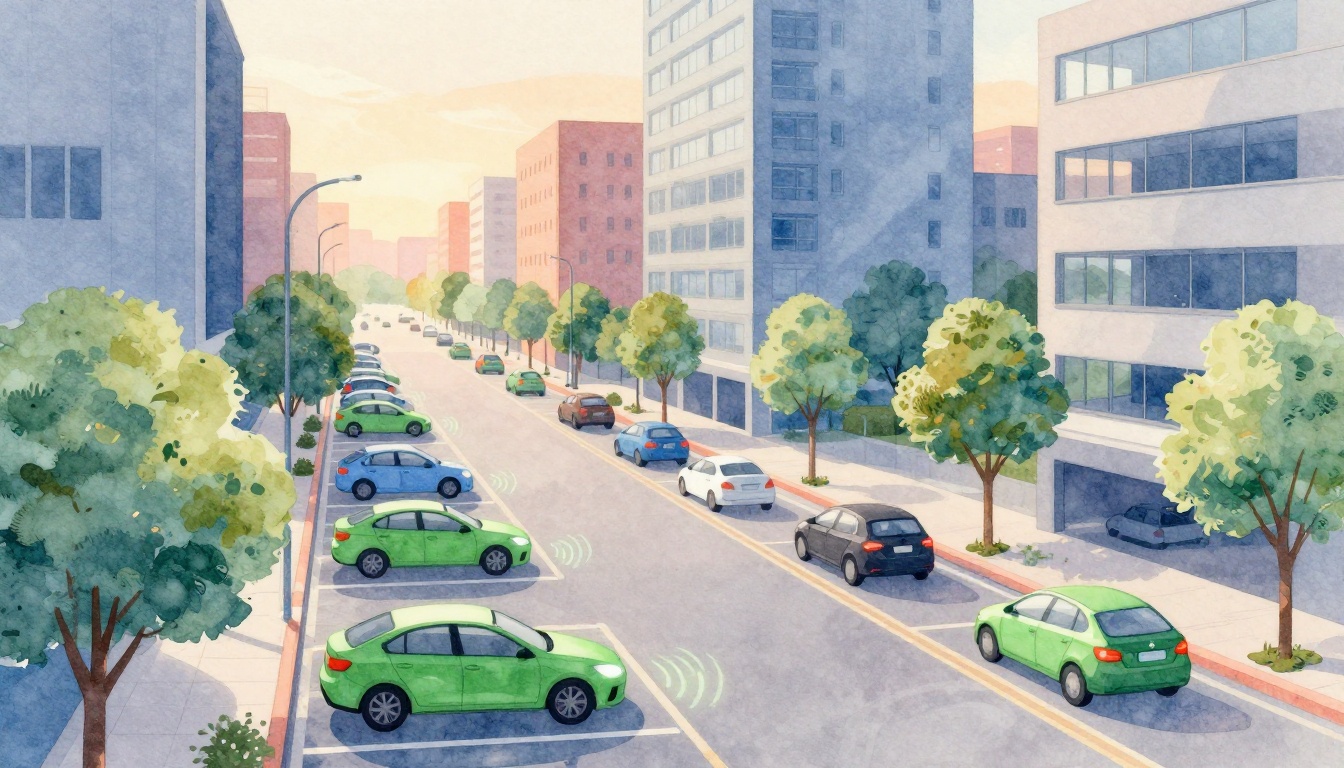
Have you ever sat in your car, creeping around a block, hoping a spot appears? That search takes time, burns fuel, and adds stress you didn’t plan for. Now add the simple math: in many cities, vehicle demand keeps rising while practical parking supply grows more slowly.
As of 2026, the result is daily chaos at curbside and in garages. The fix is not “try harder.” The fix is better parking systems that guide drivers fast, reduce risky driving, and support city goals. When parking runs smarter, streets run smarter too.
In the sections ahead, you’ll see how modern systems use sensors, apps, AI guidance, and smart pricing to cut congestion, improve safety, support local businesses, reduce emissions, and set cities up for what’s next.
How Parking Systems Slash Traffic Congestion and Free Up Roads
Congestion often starts with something small: one driver hunting for a parking spot. Multiply that by hundreds of cars, and you get slow turns, hard braking, and traffic that keeps building. A strong parking system fights this at the source by cutting the time between “I need a space” and “I found one.”
Real-time guidance changes driver behavior. Instead of guessing, people get up-to-date info about availability. Then they drive straight to an opening, not through a crowd of vehicles doing the same thing. As a result, you see fewer loops and less stop-and-go driving in busy areas.
One U.S. survey highlights how widespread the problem is. Two-thirds of drivers (66%) spend up to 15 minutes searching for parking, and 1 in 5 say it’s hard to park when they need to. Plus, 91% connect poor parking with more congestion and pollution. Those numbers make the case in plain terms.
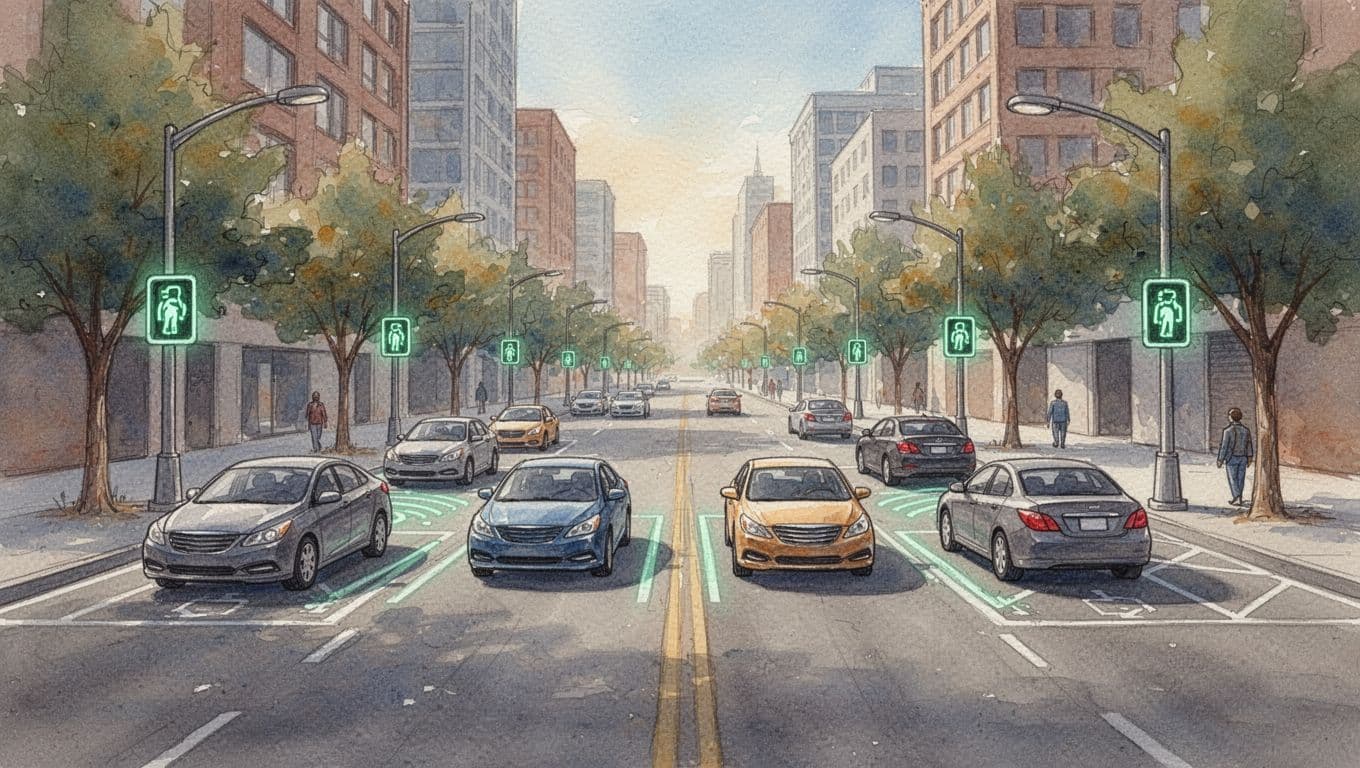
When parking systems tell drivers where to go, cities can also plan better. Guidance can reduce the “random wandering” that clogs intersections. It can also improve turnover in high-demand zones, since spots get filled and used more efficiently.
If you want a practical example, many operators focus on parking guidance systems to improve traffic flow. Precise ParkLink, for instance, explains how guidance tools help drivers reach open spaces faster, which reduces congestion around entrances and busy blocks. You can read more about that approach in how parking guidance systems reduce congestion.
Real-Time Spot Finding with Apps and Sensors
Let’s start with the simplest win: showing availability in real time. This usually comes from sensors that track occupancy (whether a space is open or taken), plus software that shares that info with drivers.
Here’s what changes when systems work well. You don’t drive until you “might” see a spot. You drive because the app says there’s an opening nearby. That’s the difference between circling and committing.
Most modern apps do three key things:
- Send timely updates as you approach an area
- Route drivers toward available spaces
- Support quick payments so drivers don’t add extra delays
Sensors make this possible. They can be installed on poles near curbside, inside garages, or at entry points. When occupancy updates keep flowing, drivers make fewer wrong turns.
Some cities also explore advanced sensing to improve accuracy. For example, LiDAR-based sensing is discussed in how a small LiDAR sensor helps smart parking. In real deployments, that kind of sensing can help reduce “false empty” spots caused by sensor blind spots or outdated data.
ParkMobile-style apps also show how guidance can feel for drivers: open the app, check nearby availability, then park with less guesswork. Even when apps use a mix of data sources, the goal stays the same, less idle time and fewer loops.
Dynamic Pricing to Balance Demand
Sometimes the bottleneck isn’t the number of spaces, it’s the pattern of demand. At peak times, many drivers show up at once. Without a smart pricing signal, you get parking pileups and repeat circling.
Dynamic pricing solves this by adjusting rates based on real-time conditions, like current occupancy or time-of-day demand. When pricing reflects scarcity, drivers make different choices. Some will shift to transit. Some will park a block farther. Others will choose a garage instead of curbside.
In plain terms, dynamic pricing spreads traffic out. It turns parking from a sudden scramble into a smoother flow.
Cities use this idea in different ways:
- Higher rates during peak demand to reduce the rush
- Lower rates in off-peak windows to fill underused inventory
- Better rules for permits and residents so neighborhoods aren’t overwhelmed
A helpful overview of smart parking benefits and how these systems improve urban transportation can be found in smart parking improvements for urban transportation. The big takeaway is that pricing and guidance work together, guidance cuts search time, pricing reduces peak spikes.
When both parts work, the road feels calmer. Drivers spend less time hunting and more time moving through the city.
Boosting Safety by Cutting Risky Driving Habits
Parking problems don’t just waste time. They also raise safety risk.
Think about how people behave while searching. They slow down suddenly. They change lanes to look for signs. They pull into gaps with poor sightlines. In a busy district, a driver who’s frustrated can make a worse choice, even if they didn’t mean to.
Smart parking systems reduce that pressure by cutting search time. When drivers find spaces quickly, they make fewer turns and fewer abrupt maneuvers. That lowers the odds of minor collisions and near misses.
It also helps with “human factors” risk. Less circling means fewer angry, stressed drivers. It also means fewer drivers staring at a phone while moving through traffic, because guidance reduces the need to roam while checking.
Enforcement can improve too. Automatic Number Plate Recognition (ANPR) cameras can support faster citation handling without forcing constant patrols in the same hotspots. That matters because chaotic curb zones often come with unclear rules. When enforcement runs consistently, drivers learn faster, and repeat behavior drops.
You can think of parking guidance as a traffic “off ramp” for drivers. Instead of forcing everyone through the same tight loop, it channels them to safer routes.
Fewer Crashes from Parking Searches
Here’s the safety logic in everyday terms. When a driver needs a space, the safest plan is simple: approach carefully, turn when you’re ready, then park and leave.
Parking searches break that plan. Drivers hesitate. They stop in odd places. They back out into lanes more often when they feel rushed.
When guidance and real-time availability reduce the hunt, drivers arrive with intention. They choose an open spot, then they park without as much improvisation.
In addition, fewer slow-moving cars in lanes helps the rest of traffic. Pedestrians crossing near curbside also benefit when vehicle movement becomes more predictable.
Finally, consistent data improves coordination. If city teams know which blocks fill up fastest, they can adjust signage, timing, and enforcement patterns. That can reduce the conditions that cause risky driving in the first place.
Fueling Local Economies with Quicker Access
Parking isn’t just a driver issue. It’s a business issue.
When parking is hard, people delay plans. Some choose a different store. Others decide to go later, when they hope it’s easier. Meanwhile, businesses lose foot traffic and time-sensitive sales.
Quick access also helps people stay longer once they arrive. If drivers know where to park and how long they can stay, they’re more likely to shop, dine, or attend events. They don’t waste the first part of the trip searching.
Cities also earn revenue from fees, permits, and smart enforcement. In many cases, better systems increase collections that are already part of the budget. The key difference is fairness and accuracy, if payment and time tracking work smoothly, more people pay what they owe.
Touch-free payment options also help turnover. When drivers don’t need to walk to a meter, the space clears faster. That creates more “first-time parking success” for the next driver.
Here’s a useful way to picture it: a city center is like a marketplace. Parking guidance acts like aisle signs. Without them, shoppers wander. With them, they reach what they need sooner.
More Shoppers and Higher Sales
Easy parking often shows up as better customer experience. When drivers spend less time circling, they arrive calmer and ready to spend.
Some parking technology providers focus on entry and flow speed in garages and lots. For example, TigerWong describes parking guidance and management solutions that can reduce friction at gates and improve how drivers reach the right parking area. That kind of flow matters during busy weekends and event nights.
Beyond the tech, the real winner is reliability. If a driver can park without stress, they trust the area more. That trust builds repeat visits.
You can also see why this ties into broader “smart mobility” thinking. Intelligent parking helps reduce friction across the trip, from the moment someone plans to arrive. If you want a compact list of benefits, benefits of intelligent parking systems outlines how cities and businesses can improve access while supporting sustainability goals.
Smart Revenue for City Services
Revenue sounds dry, but it affects sidewalks, buses, and public safety.
When parking systems collect fees more accurately, cities can fund improvements that residents feel. That might include:
- Better street lighting in parking areas
- Cleaner curb zones and safer crosswalks
- Maintenance for garages and pay stations
- Funding for transit and last-mile routes
Smart systems also help reduce lost revenue from broken equipment and confusing rules. When drivers can pay easily and understand their time, disputes drop.
Meanwhile, data improves planning. Cities can see peak demand times, occupancy patterns, and where guidance helps most. Then they can adjust street signs, hours, and parking rules without guessing.
Protecting the Environment Through Smarter Parking
Let’s talk about cleaner air without being vague.
Every minute a driver spends searching adds idling emissions. Even short stop-and-go loops can add up across busy districts. Smart parking systems reduce those loops, so less fuel gets burned doing nothing.
That’s why environmental benefits often start with traffic behavior. When drivers go straight to an open spot, they spend less time in “search mode.” Less idling means fewer tailpipe pollutants.
Parking also supports broader climate planning when paired with EV charging and efficient building operations. Garages and lots can add low-energy features like efficient lighting and monitored equipment. Over time, these steps help cities meet sustainability goals.
As EVs grow, parking systems also need to grow with them. Good planning includes charging availability, clear signage, and access rules that prevent chargers from becoming blocked by non-EVs.
Lower Emissions and Cleaner Air
The environmental case is more than theory. Research on smart parking programs often looks at both economic and environmental impacts, including reduced driving and better space utilization.
For example, the National Institute for Transportation and Communities hosts the economic and environmental impacts of smart-parking programs. Studies like this help connect parking tech to measurable outcomes, like lower emissions linked to reduced search time.
In practical terms, cleaner air comes from three things:
- Less cruising for open spaces
- Fewer hard accelerations around crowded curb zones
- Less idling at the start of a parking trip
Even if you don’t see numbers on a dashboard, you can feel the difference when parking gets easier. Streets move smoother, and the air often feels fresher during rush periods.
Paving the Way for Smarter, Connected Cities
Parking systems do not live alone. They connect to the rest of city life.
Today’s best setups share data across curbside, garages, and transit hubs. They may also connect with bike and bus guidance so people can switch modes without stress. Meanwhile, AI can help predict demand patterns, so cities can prepare for the next event or seasonal spike.
This matters even more as cities plan for future mobility. Autonomous cars will still need reliable space access. E-scooters and micromobility need safe parking zones. Buses need predictable stops, not chaos caused by random curb parking.
So the question shifts from “Where can I park?” to “How does the city manage movement end-to-end?”
Connecting curbside, garages, and transit data
When parking data connects, routing gets smarter. A driver might start near a transit station, then switch to parking if their preferred option fills up. This can also reduce pressure on specific blocks, since the system can steer drivers to better availability farther away.
Connected systems can also support better policies. For instance, neighborhoods can get resident permit protections while visitors get time-based options that don’t overwhelm local streets.
If you want a broader picture of what researchers and operators focus on, Cocoparks offers a smart parking solutions state of research. That kind of roundup helps show how sensors, data platforms, and guidance tools fit together in real deployments.
Preparing for EVs and autonomous arrivals
EVs and new vehicle tech change parking needs. Charging availability becomes part of “space availability.” In other words, the parking system must handle more than car count. It must handle power access, time limits, and fair use.
Autonomous and assisted driving also raise the bar for accuracy and communication. A system that only updates once a minute might be too slow in a dense garage. That’s why many cities keep upgrading sensing and data delivery.
The best long-term plans treat parking like a service, not a static lot. They invest in the data layer first. Then they add curb management, payments, guidance, and charging.
When that happens, parking stops being a daily headache. It becomes a quiet background function, like streetlights. You notice when it fails, and you barely notice it works.
Conclusion
Parking systems matter because they fix a daily pain that adds up fast. Smarter guidance cuts circling, which means less congestion, fewer near misses, and calmer drivers.
Better systems also support local businesses by making it easier to arrive and shop. At the same time, reduced idling and smarter utilization help cities breathe a little easier.
If you want a smoother city experience in 2026, start where it begins: use (and support) real-time parking apps, pay fairly, and choose guidance over guessing. Then push your city to keep improving parking data. After all, easier parking makes city life feel lighter right away.