Ever sit in traffic, circling a crowded lot, watching the same cars cut you off? In 2026, that frustration hits harder. Cities feel tighter, EVs add new charging needs, and many people expect parking to work like an app, not a scavenger hunt.
That’s why types of parking systems matter more than ever. The right setup can reduce driving time, cut wasted space, and make daily parking feel calmer.
So let’s break down the main options, from traditional lots to fully automated garages and self-parking vehicles. Then you can pick the best match for your budget, location, and tech comfort level.
Why Traditional Parking Systems Still Rule Everyday Lots
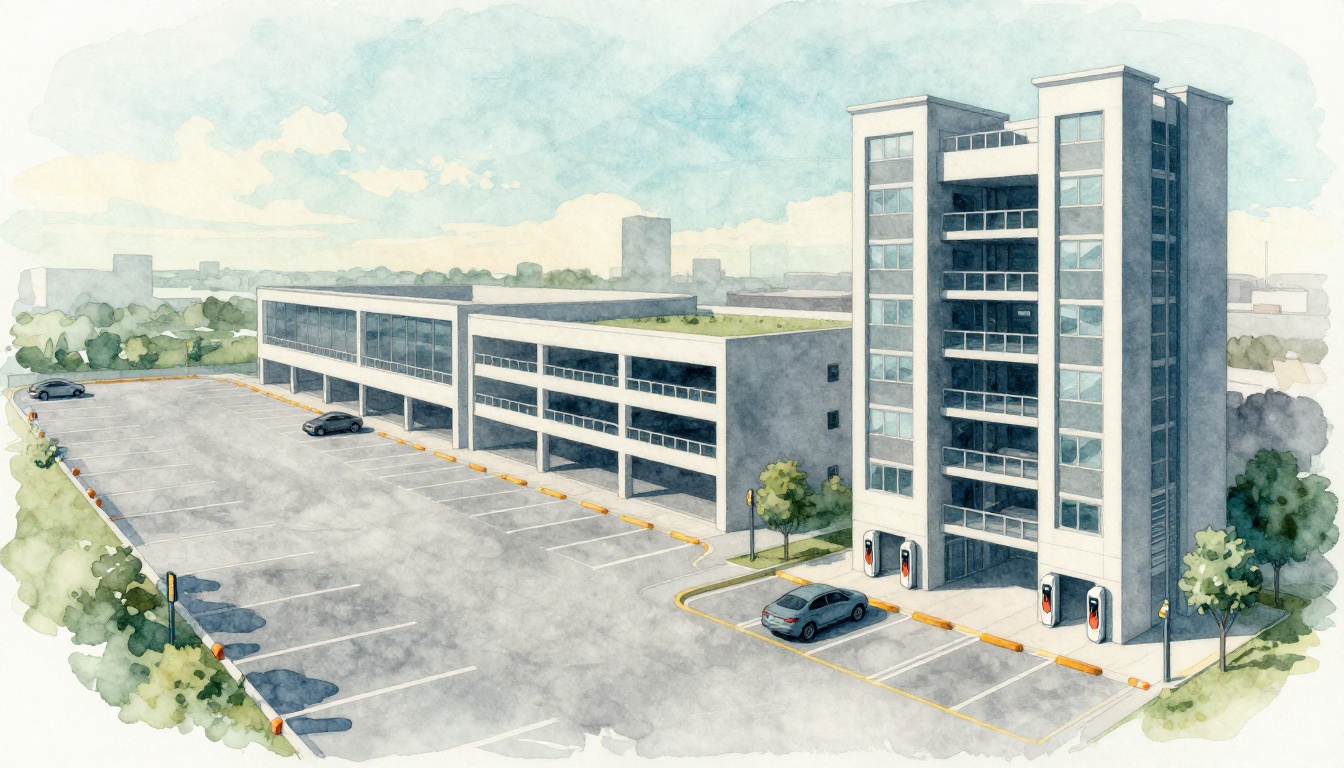
Traditional parking systems are the basics you see everywhere: open surface lots and multi-story garages where drivers park themselves. You pull in, follow aisle lines, and choose an empty marked space. In many places, it’s still the fastest way to get what you need.
These systems win on a simple level. They’re familiar, easy to understand, and usually cheaper to build than high-tech facilities. Plus, access is straightforward, especially if you already have road space nearby. For many sites, they work just like parking at the grocery store. You don’t need special steps, training, or app setup.
There’s also a big practical upside: low build cost and easy access. If you run a mall, airport, or event venue, you can plan flows with signs, gates, and row layouts. Then you can scale by adding more spaces, not new machinery.
Still, traditional parking has real drawbacks. In dense areas, land costs soar. Surface lots also waste space because cars need wide aisles for turning and walking. Multi-story garages help, but ramps and driving paths still take up valuable room.
That’s why some sites shift away from purely traditional layouts over time. Even so, they remain a strong choice for suburbs, budget developments, and areas where you can expand with minimal disruption.
If you want a deeper look at how traditional management compares with newer approaches, see traditional parking management vs. innovative solutions.
Stack Up Your Space with Mechanical Parking Systems
Mechanical parking systems aim at one thing: more cars in less footprint. Instead of relying only on ramps and human driving, these systems use machines to lift, stack, or rotate vehicles.
Think of it like a storage unit, but vertical and automatic. You still move through a facility, but the equipment handles the tight space math. As a result, mechanical options often help when land is limited, yet full automation feels too complex or too costly.
Also, mechanical systems can be a middle step. They improve space use without requiring the same level of robotics as fully automated valet-style garages. That balance matters for hotels, apartments, dealerships, and smaller sites.
In 2026, EV needs show up in planning. Many mechanical facilities now pair with EV-ready electrical design, and some layouts include charging arms near pick-up points. Safety planning also matters more, including fire detection and clear access routes.
To understand how developers weigh mechanical options against other automated types, this guide on mechanical stackers vs. puzzle vs. robotic solutions is a useful reference.
Here are the key mechanical subtypes that come up most often.
Double and Triple Car Stackers
Double and triple car stackers use vertical stacking. In simple terms, two or three vehicles share one “stack” area. The space savings can be dramatic, because you remove a lot of driving and turning space.
A common pattern is this: the bottom car moves first, so access stays safe. Then the machine lowers or shifts other cars in the stack. This keeps the system predictable, but it also means retrieval can be slower than self-parking.
Where do these stackers shine?
- Apartments with limited outdoor space
- Dealership lots that want indoor storage
- Mixed-use sites where surface parking costs too much
- Locations where you want a compact setup without full robotics
The biggest upside is cost-effective density. You can often triple capacity in a footprint that would otherwise hold one or two cars. However, the wait time can feel longer during busy hours, especially when multiple vehicles need access at the same time.
So, if your facility has steady demand (not constant peak turnover), stackers can be a smart fit.
Rotary Parking Carousels
Rotary parking systems, often called carousels, rotate platforms to bring cars to the access point. Picture a slow ferris wheel, but built for parking. Vehicles sit on multiple levels, and the system rotates the platform until your car lines up with the pick-up spot.
These systems can fit surprisingly well on tight plots. In many designs, you get fast installation compared with deep-building construction. Capacity often lands in the mid range, commonly around 8 to 20 cars depending on the model and layout.
For a clear look at how rotary mechanisms work, check rotary automatic car lifts.
What’s the tradeoff? Rotary carousels can handle multiple vehicles efficiently, yet the system still needs time to rotate and position each car. Also, the layout must be engineered carefully to match site conditions and access doors.
Even so, when space is tight and you want real density gains, rotary parking can be a great compromise between basic surface parking and higher-level automation.
Go Hands-Free with Fully Automated Parking Systems
Fully automated parking systems take the “parking support” idea to a new level. Drivers typically drop off the vehicle, then machines move it into a tight storage spot with minimal driver involvement.
Because they reduce or remove aisle driving, these systems can deliver much higher space efficiency than traditional garages. Depending on the design, people often talk about packing roughly 4 to 6 times the number of spots in the same footprint.
That matters most for city centers. In tower settings, land is expensive, and every extra parking bay has a real cost. Automated systems can also reduce traffic inside the garage. Since fewer people drive around searching, you can cut confusion and improve safety.
In 2026, automation projects also lean on better planning tools. Builders use modeling and detailed site design to reduce surprises. Also, EV integration is growing, because charging planning needs predictable layouts.
Here’s a comparison view to make the differences clearer.
| Fully automated system | How you access your car | Space efficiency | Best for |
|---|---|---|---|
| Vertical parking towers | Vehicle moves via elevator core | Very high | Small urban plots with tall construction |
| Puzzle parking systems | Platforms shift like a grid | High (often 4 to 6x) | Standalone garages and dense sites |
| AGV robotic parking | Robots shuttle cars from entry | High, scalable | Sites needing flexible operations |
For a real-world example of space gains with robotic valet setups, see AGV-based robotic parking space gains.
Now let’s break down the main automated types.
Vertical Parking Towers
Vertical parking towers are like a skyscraper, but for cars. They use elevators and mechanical movements to store vehicles at height. Cars shift on sides of an elevator core, then move into a ready position when it’s time to retrieve them.
These systems suit places where the footprint is tiny and height is available. The space density can be extreme, because you stack upward with tight storage bays.
The look can feel futuristic, but the idea is simple. You don’t drive a ramp. The system handles positioning.
Pros include:
- Ultra-dense capacity
- Smaller ground area footprint
- Clear entry and retrieval points
Cons include waiting time during retrieval cycles. That said, many facilities design workflows to keep the experience smooth during busy periods.
Puzzle Parking Systems
Puzzle parking systems use a grid of platforms that move. Each platform shifts to unlock access to the car you want. The system can shuffle vehicles up and down like pieces on a moving board.
These layouts can be taller too. Many puzzle garages operate in the multi-story range, sometimes described in feet of vertical storage. The result is a major capacity boost, often in the same neighborhood of 4 to 6 times traditional options, depending on configuration.
A big advantage is that puzzle systems can work well as standalone buildings. Also, they can be planned to reduce garage motion complexity compared with some older approaches.
The main downside is cycle time. Since platforms must rearrange, retrieval order matters. If your site sees unpredictable peaks, you may need careful scheduling and design to keep delays low.
AGV Robotic Parking
AGV stands for automated guided vehicles. In these systems, robots transport cars from the entry point to storage spots. Then they bring your car back when you need it.
AGV parking often gets praised for flexibility. Because robots move cars, the system doesn’t always rely on the same fixed rotation patterns as some purely mechanical designs. Many developers also like that AGVs can improve space efficiency while keeping retrieval workflows controlled.
A key difference is that your experience depends more on the entry bay and robot routes, not on driving inside aisles. Typically, drivers exit after drop-off, then robots handle the rest.
In 2026, these systems also pair well with smart access control. For example, some setups connect entry to license plate readers and booking data.
The tradeoff? Robotics projects require planning, maintenance, and solid safety protocols. Still, when designed well, AGV garages can reduce confusion for drivers and boost capacity for property owners.
Smart Parking and Underground Solutions for Modern Challenges
Sometimes you don’t need a full rewrite of how parking works. Instead, you upgrade guidance, access, and space use. That’s where smart parking and underground solutions combine well.
Smart parking uses sensors, cameras, and apps to show real-time availability. It can also use software logic to predict demand. Then it supports better pricing or booking at the right times.
Meanwhile, underground parking focuses on where vehicles sit. By building below ground, you free up surface space for parks, walkways, or mixed-use design. That can matter a lot in downtown areas.
So, what problem do these approaches solve? They reduce time spent hunting for spots. Less circling means less congestion. It also means fewer near-misses and calmer arrivals.
Smart features often include:
- Occupancy sensors for spot availability
- License plate readers (LPR) for entry and exit
- Apps for booking and payment
- AI predictions for demand and pricing
If you want an example of real-time visibility in action, read about real-time parking visibility in Greenville, SC.
On the EV side, smart systems also support charger demand planning. Since drivers rely on quick charging, you can improve uptime by matching availability with expected arrivals.
For how AI-based systems can compare to older parking approaches, AI vs. traditional parking systems cost-benefit offers a clear angle on efficiency and long-run cost tradeoffs.
How Smart Sensors and Apps Make Parking Effortless
Smart sensors and apps cut the “where do I go?” problem. First, sensors detect which spaces are open. Next, an app or display helps you find them quickly.
In 2026, many smart setups use AI to predict near-future demand. That helps avoid empty spots that drivers never see. It also supports more stable operations for facility managers.
Another perk is enforcement. Automated systems can reduce manual checks by flagging issues through software. That doesn’t mean there’s no staffing, but it can mean fewer repetitive tasks.
If you’ve ever watched someone stop in the lane to search for a spot, you know why this matters. Smart guidance keeps traffic moving, even when lots get busy. It also improves the feel of the facility, because people don’t act stressed.
Underground Parking: Build Up, Park Down
Underground parking hides the cars below. As a result, surface land can stay available for green areas, building entrances, and pedestrian flow.
Underground designs often pair well with automation because space below can be constrained. Lifts, robots, or mechanical moves can handle compact storage better than wide aisle layouts.
In addition, underground garages can support better EV planning. Since you already have electrical infrastructure in place, adding charging stations can become a planned upgrade, not a last-minute scramble.
The big benefit is simple: more usable land above. If the surrounding area matters for business or community goals, underground parking can protect that value.
The next step in this evolution is even more driver-friendly.
Self-Parking Cars: When Your Vehicle Handles It All
Self-parking cars use sensors and cameras to guide the car into a spot. Some systems use radar or LiDAR as well. Then they combine control software to steer and move safely.
You’ve probably seen demos like “summon” features. In many cases, the car can move into a nearby space on its own. Some vehicles can also park with an app command while you stand nearby.
Popular examples include feature sets like Tesla Summon and parking assist systems on vehicles from major automakers, including Mercedes and Hyundai. In the real world, these features vary by model year, local rules, and the exact parking conditions.
Pros include:
- Less stress for tight spaces
- Remote control options via phone
- Potential for smoother entry into structured lots
There’s also a key point. Self-parking cars don’t replace parking facilities by themselves. Instead, they often complement smarter garage design, especially when spaces have consistent layout and clear access paths.
In 2026, more drivers expect these features. Yet the tech is still evolving, so it works best in conditions the system is trained for.
If you combine self-parking with smart guidance, drivers can find the right spot fast. Then the car can handle the final inches.
Parking Trends and Innovations Lighting Up 2026
Parking systems 2026 trends aren’t just about new hardware. They’re about better fit for how people drive now, especially with EVs and mobile expectations.
Here are the themes shaping what you’ll see next:
- EV-ready layouts, including smarter charger planning
- More mobile payments and app bookings (many smart setups report high adoption)
- AI predictions to reduce guesswork in availability
- License plate readers and automated enforcement to reduce manual workload
- Better planning for safety, including battery-related fire precautions
Also, the market outlook is getting attention. In the US, parking tech is growing fast due to automation and self-parking trends. Recent estimates place the market around $30 billion this year, with a push toward $42 billion by 2033. Along the way, automation and smart upgrades keep gaining momentum.
For everyday drivers, that means less circling and fewer surprises. For owners, it means more predictable revenue, better utilization, and higher space density.
So when someone asks, “What type of parking system should we choose?” the best answer starts with reality. How many cars do you need to store? How tight is the site? What tech level can your team support?
Conclusion: Choosing the Right Parking System Saves More Than Time
If you’ve ever circled a lot, you already know the pain. The right parking setup can cut that hunt fast, and it can do it in ways that fit your site size and budget.
Traditional parking still works well for many locations because it’s familiar and simple. Mechanical systems pack more cars into less space. Fully automated setups go even further with robotics and tight storage. Smart sensors reduce driving stress, and self-parking cars can handle the final move.
In 2026, EV needs and AI-powered guidance are pushing every type toward better results. Your best next step is to match the system to your constraints, not the other way around.
Which type of parking system would you want at your next building or event? Share your pick in the comments, and if you’re planning an install, get expert input before you commit. Smarter parking awaits.