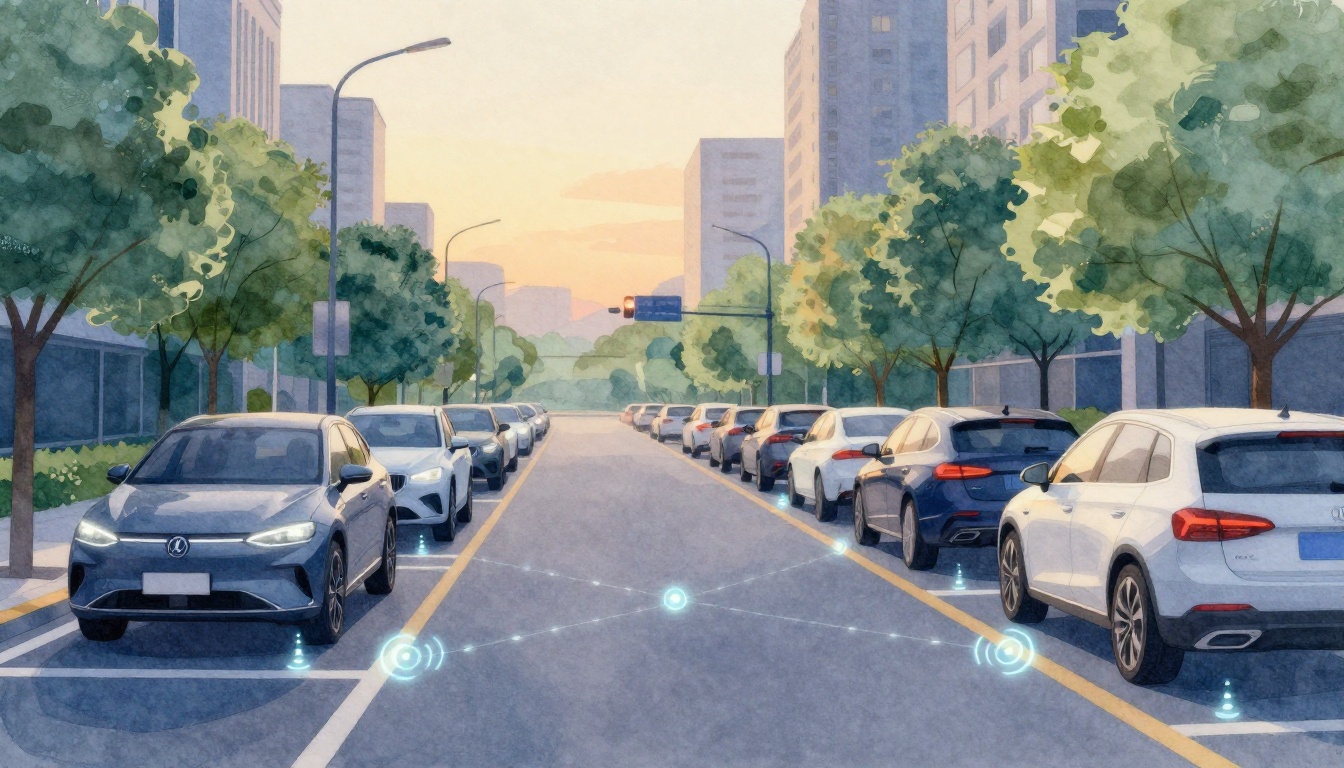
Ever sat in your car, circling the same block, hoping a spot opens up? It’s stressful, and it wastes fuel too.
In U.S. cities, a large share of drivers lose time just searching. One T2 Systems study found 66% of drivers waste up to 15 minutes finding parking, which adds to traffic jams. Multiply that by rush hour, and the road gets clogged even before people reach their destination.
That’s where parking systems reduce traffic congestion in a practical way. Modern tools like smart sensors, driver apps, and even automated enforcement help cities cut “parking cruising” (driving around for availability). As a result, fewer cars idle, intersections clear faster, and drivers spend more time doing their day and less time hunting for a spot.
The rest is about the mechanics. Once you see how these systems work, the congestion drop makes sense.
How Smart Sensors and Apps Guide Drivers Straight to Spots
Think of smart parking like traffic lights for parking. Instead of forcing drivers to guess, it shows what’s available now and where it’s located.
Most systems use sensors in each space (or overhead units in garages). Those sensors send occupancy data to a hub, which then updates screens, signage, or a driver’s app. If a spot is open, the system signals it. If it’s full, it stays dark.
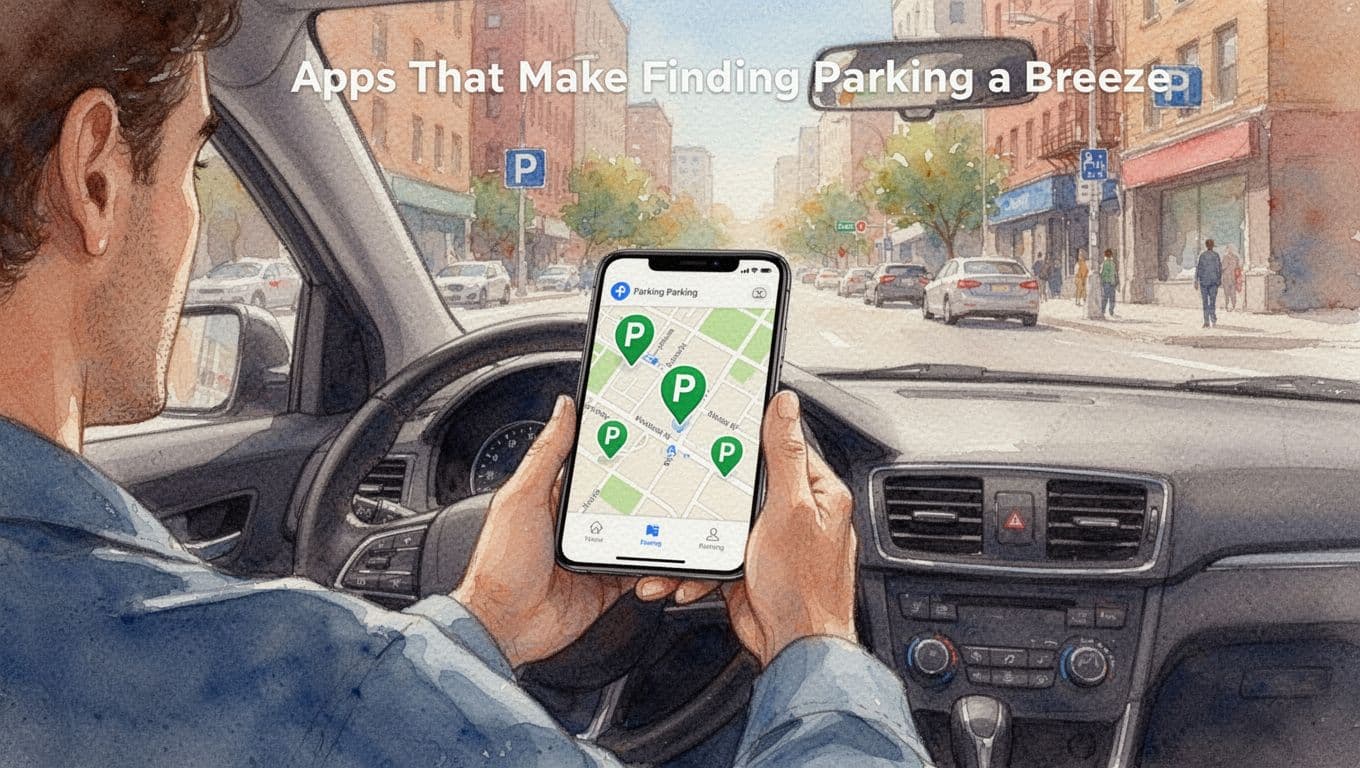
Then there’s the “where should I go?” part. Apps can display nearby availability, often as a live map. That means drivers can head toward an open space instead of slowly looping through the area.
Real evidence backs this up. Cornell Chronicle reported that smart parking software matching drivers to garage spots based on travel time and walking distance cut time spent looking for parking by an estimated 64% per vehicle using San Francisco data. You can read the summary in Cornell Chronicle’s smart parking study.
Less searching means fewer slow trips, fewer U-turns, and fewer near-misses at crowded curb space. Over time, that’s a real traffic win.
Sensors That Spot Empty Spaces in Real Time
Smart parking sensors detect whether a space is occupied. In many setups, they work in-ground or via overhead detection, then feed availability to the system.
The payoff is simple. Drivers don’t need to drive until they “hope” something opens. They can plan the approach. That alone reduces congestion because the typical search pattern is repetitive and wasteful.
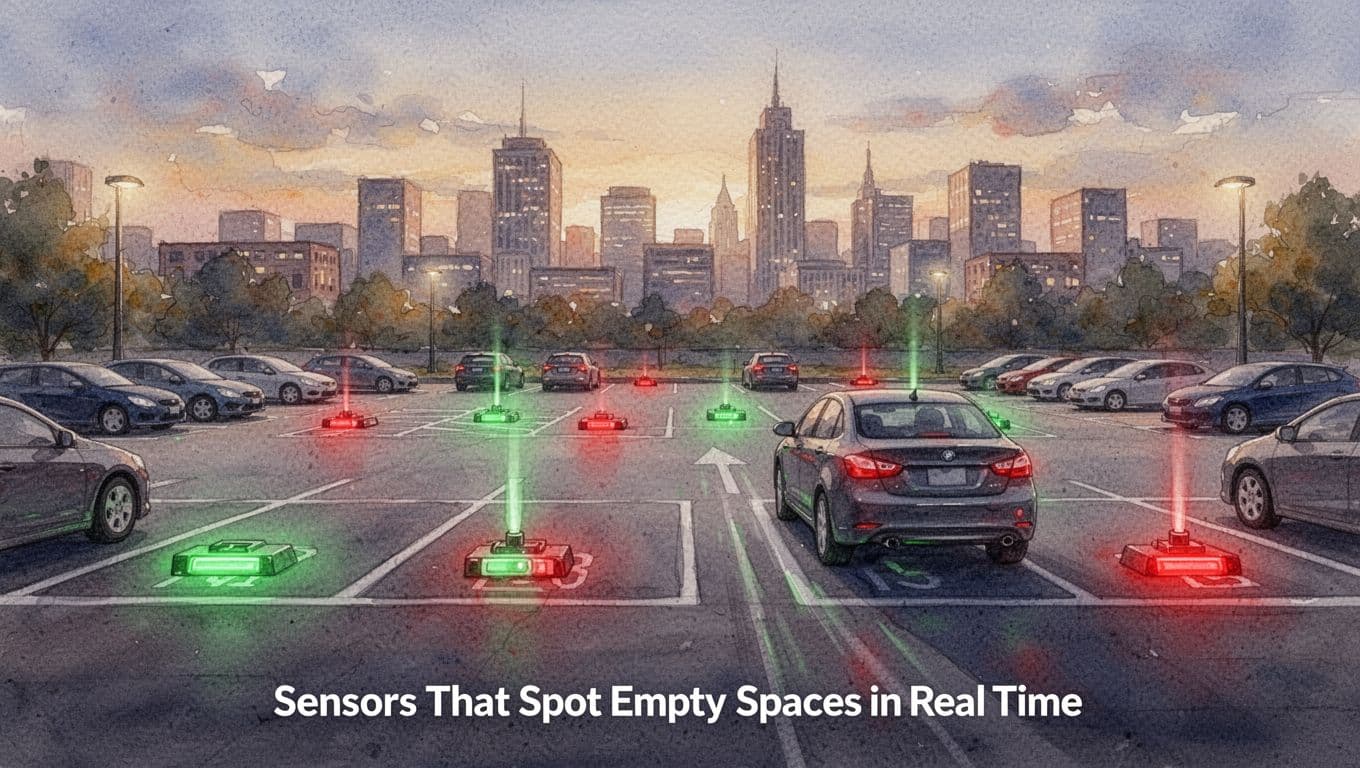
In other words, the sensor turns a blind hunt into a guided decision. Instead of “cruise and scan,” it becomes “look up and go.”
Apps That Make Finding Parking a Breeze
Apps make the real-time info useful. They show where open spaces are, often with walk time, distance, or “closest available” sorting.
You can integrate that into navigation, so drivers don’t bounce between apps. For many people, it feels like getting a calm assistant during a chaotic commute.
Here’s how it typically goes:
- Open the parking app.
- Check the map for open spots nearby.
- Head to the suggested area (then park).
Because the app reduces search time, it also reduces time spent at slow speeds. As a result, roads recover faster between green lights and turning waves.
And when more drivers park on the first pass, there’s less demand shock at every corner. That’s the congestion relief cities want.
Dynamic Pricing to Spread Out the Crowds
Even with live availability, demand can spike. Dynamic pricing helps here. Rates adjust based on real demand, so the busiest blocks don’t get overwhelmed.
When prices rise at peak times, drivers shift to nearby areas. When demand drops, the system can lower rates to keep spaces in use. The goal is not punishment, it’s balance.
San Francisco’s SFpark model is often cited as a practical example of “parking by demand.” If you want a deeper look, see Pricing Parking by Demand in the SFpark program.
Here’s the traffic logic. When pricing spreads demand, fewer drivers circle the same block waiting for a miracle. That reduces peak congestion loops and makes available curb space feel more reliable.
Enforcement and Guidance Tech for Non-Stop Flow
Search time is one problem. Another is what happens at the curb and inside lots.
Old systems can create delays: cars line up for payment kiosks, gates bottleneck entry, and manual enforcement slows the flow. Modern enforcement tech reduces friction at both points.
Some parking systems use automated license plate recognition (ALPR) to verify payment and permit status. Others use guidance lights inside garages to point drivers toward the next open area.
The result is less idling and fewer slowdowns during entry and exit. Also, fewer “traffic surprises” mean smoother driving behavior.
Ticketless Systems That Skip the Drama
Ticketless enforcement removes the “stop, argue, and wait” part of parking.
Instead of paper tickets and manual check runs, ALPR camera networks can match vehicles to rules in real time. That cuts staff effort and helps keep enforcement consistent.
If you want a plain-language overview of how ALPR can replace manual ticketing, review ALPR for parking management and ticketing.
Less enforcement chaos helps congestion because fewer drivers block lanes while disputes happen. It also helps lots turn over faster, so more drivers park without creating backup traffic.
Also consider this: when payment is easy and enforcement is predictable, drivers adapt sooner. They don’t keep “trying” the same spot like it’s a slot machine.
Smart Lights and Hubs for Effortless Parking
Inside garages, guidance systems can direct drivers to open sections. Think of it as lane guidance without the confusion.
Some cities also use parking hubs on the edge of busy areas. Drivers park there, then connect to transit, shuttles, or bike routes. That reduces downtown driving pressure and keeps core streets cleaner.
These hubs matter because congestion is often worst where destinations stack up. If you move parking demand slightly outward, the center gets breathing room.
Real Wins from Cities and What’s Next in 2026
Cities aren’t guessing anymore. They’re measuring cruising patterns and testing system changes.
San Francisco’s research has been influential for years, and it keeps showing how smart matching affects search time and congestion. In parallel, other cities run pilots and expand coverage as the tech matures.
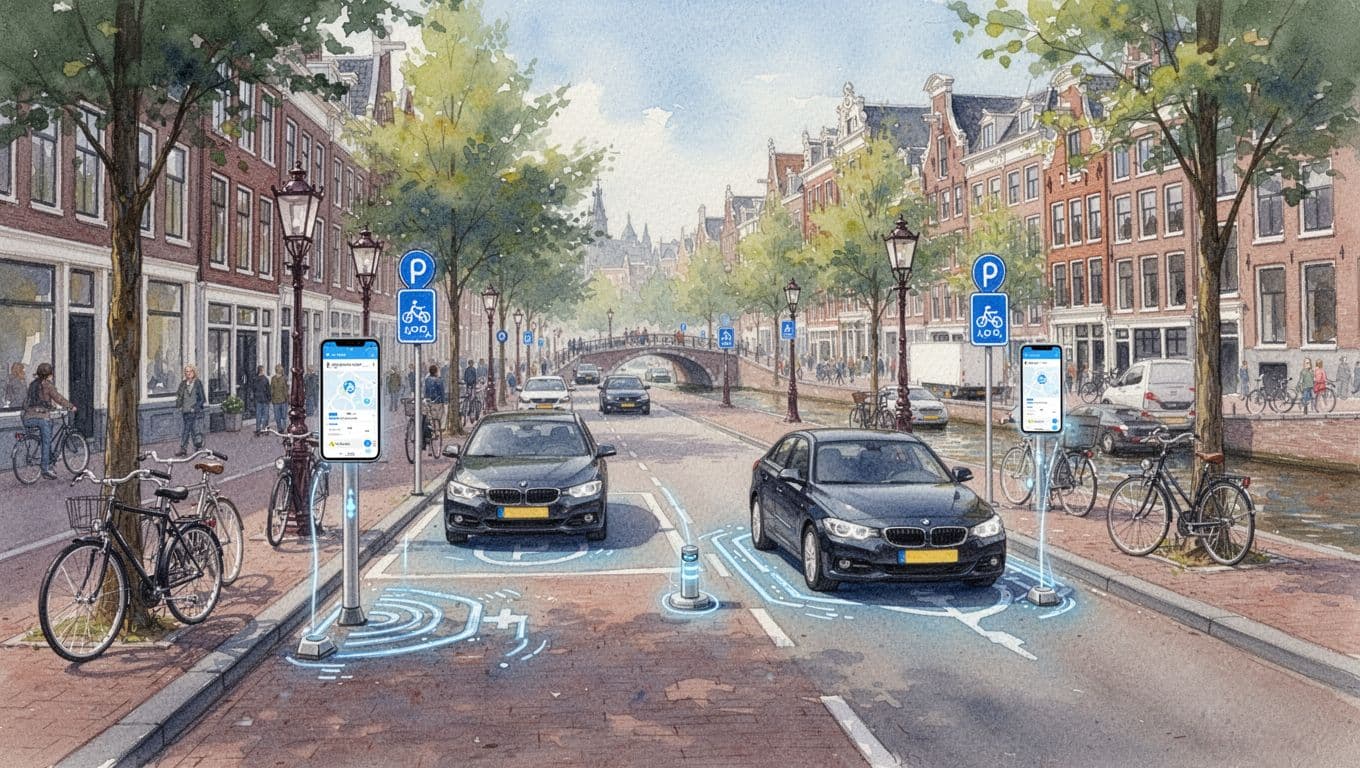
Amsterdam and Barcelona are often referenced for using sensors and apps to guide drivers, not just collect data. When availability becomes visible, drivers stop treating every block as a gamble.
The bigger shift for 2026 is how many systems work together, not alone.
Cities Crushing Congestion with Parking Tech
When sensors, apps, and pricing work as one system, the city sees compounding benefits.
Drivers search less. That cuts cruising miles. Roads feel calmer. Then turnover improves because entry and exit get faster too.
Many cities also use parking data to support bus performance. When fewer cars clog travel lanes near pick-up areas, transit gets more consistent. That’s one reason parking tech often earns support from multiple departments, not just parking agencies.
2026 Trends Set to Transform Streets
In 2026, smart parking gets more focused on outcomes. Cities and operators are moving toward better coverage (more spaces detected), better prediction (where demand will hit next), and better integration with mobility.
Expect more systems that pair parking availability with transit planning, and more tools that support EV parking needs. In practice, that means fewer “parking dead ends,” especially during event nights.
For a look at how innovations like AI analysis and automation are shaping current smart parking plans, see Smart Parking 2025 innovations.
Conclusion
Parking systems reduce traffic congestion because they shrink the time drivers spend searching. Sensors show which spots are open. Apps guide people to the right block. Dynamic pricing spreads demand so crowds don’t stack in one place.
Then enforcement and guidance technology keep entry, exit, and compliance from causing new bottlenecks. That’s how parking stops being a hidden cause of gridlock.
If you want fewer circles during your next commute, start by checking your local parking app. And if your city is choosing upgrades, ask whether the plan includes real-time availability and demand-aware pricing. That’s where the biggest congestion gains show up first.