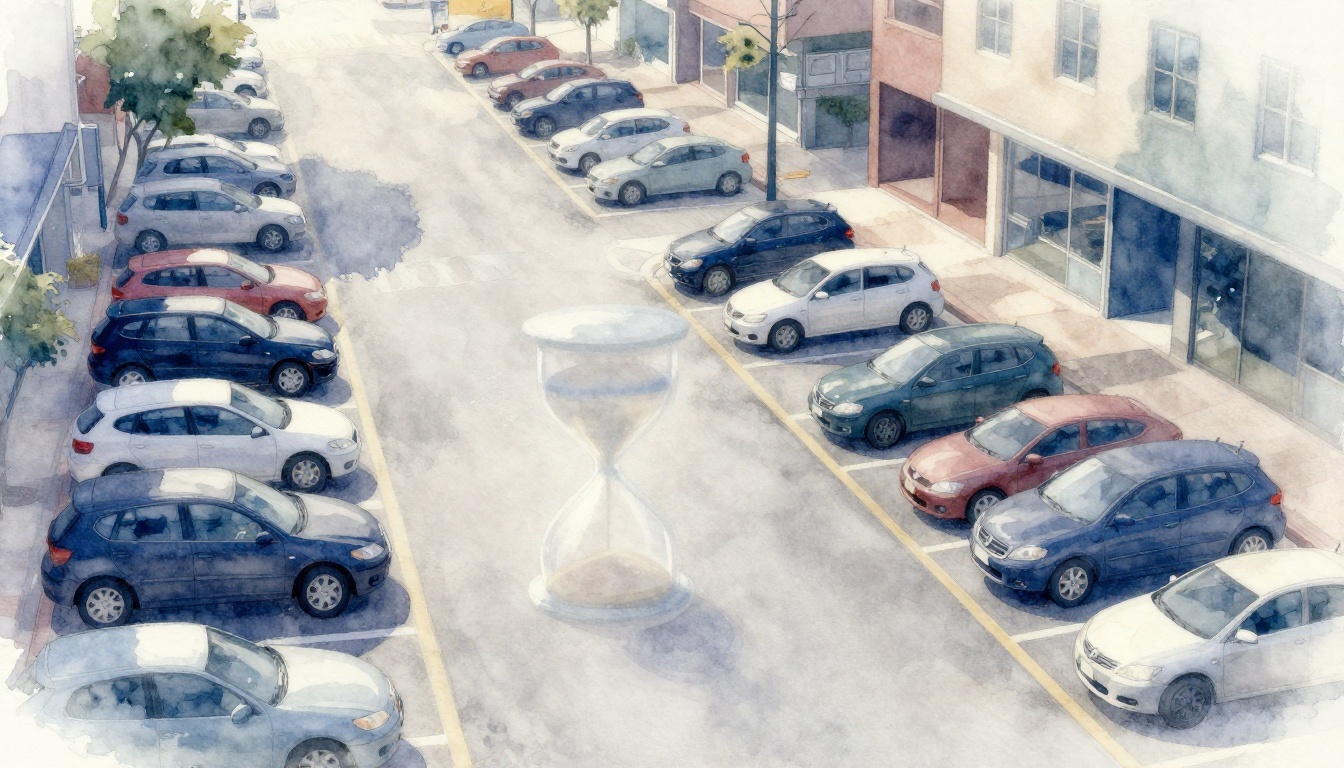
Have you ever circled downtown, watching the clock tick, while the “perfect” spot stays just out of reach? In 2026, US city drivers waste up to 15 minutes searching for parking 66% of the time, averaging 17 hours per year. That time adds up fast, costing drivers around $345 in time, fuel, and emissions.
When parking is used inefficiently, the pain is more than personal frustration. It can clog roads, waste valuable land, and push overall costs higher for everyone. And right now, some of the biggest causes still feel normal, even when they backfire.
The main drivers are not mysterious. Outdated parking minimums force cities and builders to add more spots than people use. Free parking encourages cruising and reduces turnover. Finally, poor management and weak tech leave parking supply mismatched to real demand.
In the sections below, you’ll learn how these causes work, where they show up in real cities, and why recent reforms (through 2025 and into early 2026) are starting to change what “good parking policy” means.
Outdated Parking Minimums Force Builders to Waste Land
Parking minimums are rules in zoning and building permits. They require new projects to include a set number of parking spaces, even if the area does not need them. In many places, the logic is simple: “More cars means more parking.” The result, though, is often more parking than anyone actually uses.
Those extra spots take up land, add construction costs, and make it harder to build more homes, shops, and offices. Research syntheses on parking minimums point to consistent outcomes: these rules can increase development costs and steer projects toward car-heavy layouts instead of walkable ones. For a deeper look at what the research says, see The Impacts of Minimum Parking Requirements: A Research Synthesis.
Then comes the real-world mismatch. Work patterns changed. Many jobs do not operate like they did in the 1990s. Hybrid schedules, fewer daily commutes, and more flexible trips shrink peak demand for office parking. In 2026, reforms are accelerating because parking minimums no longer match how people move.
Meanwhile, developers still follow the old math. If a zoning code assumes full-day peak parking, a building may end up over-supplied for most hours.
Here’s why that matters for the broader problem of inefficient use of parking spaces: when supply stays fixed but demand shifts, you get empty lots next to busy blocks, plus extra curb cruising that happens elsewhere.
Cities are starting to act, because minimums often lock communities into expensive land use for decades. Over time, that can mean fewer resources for housing or transit upgrades.
A key sign of change: many US cities have now abolished parking minimums, and several states have moved to limit them, especially near transit. In other words, the old default is breaking.
How Minimums Ignore Real-Life Driving Patterns
Parking minimums are usually set from old peak assumptions. Many were built around one central idea: cars all show up at the same time, every weekday. But most cities don’t work that way anymore.
Think about an office park built to serve a full-time workforce. If remote work reduces daily trips, the building’s parking lot becomes half-empty by default. That spare capacity is not “free.” It still cost money to build, and it still occupies space that could support housing or mixed-use buildings.
The same story repeats in other settings too. Retail centers face weekend peaks, but weekday demand can drop sharply. Schools see heavy traffic at pickup times, yet their lots often sit idle for long stretches.
So even if the project has enough spaces for its own peak day, the city can still experience inefficient outcomes. Nearby streets may become the overflow option, because people hunt for parking where they can find it easiest.
Another way to see the problem is to treat parking like a train schedule. If trains run every 10 minutes, riders expect short waits. But minimum rules build a fixed parking “schedule” even when demand changes hour to hour. When demand shifts, the system starts producing waits, not because people want delays, but because supply cannot flex.
For readers who want an overview of how reform affects housing outcomes, Streetsblog USA also covers findings on how removing parking minimums can boost affordability in practice (with Colorado as a key example): Study: Removing Parking Minimums Leads to More Affordable Housing.
The bottom line here is simple: parking minimums can turn today’s flexible travel habits into tomorrow’s underused lots.
Success Stories from Cities Dropping These Rules
Some cities did not just debate parking minimums. They changed them, then watched what happened.
San Francisco ended parking minimums citywide in 2018. That move helped shift development toward places where people can live, walk, and use transit more easily.
Minneapolis removed parking minimums in phases around 2019 to 2021 under its Minneapolis 2040 plan. The city saw housing affordability signals, including reported rent declines from 2019 to 2024 while the national market rose.
Dallas cut minimums sharply for large projects and ended them for smaller projects (under 20 units). Those changes mattered because new builds often happen in the “missing middle” range where parking rules can be especially burdensome.
States also joined in. In Colorado, a 2024 state law ended minimums near transit hubs, and Denver later moved to end them citywide in August 2025. Washington’s Parking Reform Act set a new direction by capping parking based on unit type starting in 2027 for cities over 50,000 people.
You can also see this reform wave linked to broader zoning changes. If you’re curious how parking policy connects to the wider shift in land-use rules, this mapping project provides a related look: America’s great zoning revolution, mapped and measured.
One more reason these stories matter for inefficient parking use: when cities stop overbuilding parking, land can return to better uses. That usually means more homes and better neighborhood services. It can also reduce the “spillover” cruising effect, because there’s less temptation to hunt for the wrong kind of parking in the first place.
Free Parking Turns Drivers into Endless Searchers
Free parking sounds generous. It feels neighborly. But in dense areas, it can create a loop where drivers cruise longer, streets get slower, and the system never settles.
In 2026, 66% of city drivers spend up to 15 minutes searching each trip. That time is not just personal stress. It burns fuel and adds traffic, especially during peak shopping and commute periods.
Free parking also changes behavior in subtle ways. If spots cost nothing, people treat parking like a perk instead of a limited resource. As a result, they may park longer, shop later, or take their time when they should be turning over.
Poor turnover is one of the most common ways free parking causes inefficient use of parking spaces. A spot that could serve more people ends up blocked for too long by the first driver who arrives. Then the next driver circles, hoping the empty space appears.
Parking expert Donald Shoup has long argued that when parking is priced as “free,” the city behaves like it owes drivers unlimited supply. Real curb space is not infinite. It’s just allocated poorly.
In practice, the city pays twice. First, through slower streets and added cruising. Second, through hidden costs that show up later, like higher rents or higher repair needs funded indirectly by general budgets.
If you want a grounded look at how “free” or mandated parking can raise costs, this explainer connects the dots: How Mandated Parking Minimums Drive Up Housing Costs.
The Time and Fuel Wasted on Parking Hunts
Extra cruising wastes more than time. It adds emissions and stress.
In 2026, wasted search time is tied to measurable costs. Drivers burn fuel during repeated passes. They also produce more congestion, because each searching car takes up road space that other cars could use directly.
This is where “inefficient parking use” becomes a chain reaction. A single driver circling to save a few dollars can slow traffic for everyone nearby. That slowdown can spill into buses, deliveries, and emergency response times.
Picture a busy weeknight in a city core. You’re heading out for dinner. Parking feels like a puzzle with missing pieces. You arrive, you search, you pass the same block twice, then you finally park a few streets away. Meanwhile, traffic behind you keeps stacking up.
Surveys also show the emotional hit. When people circle, they often feel stressed. Some miss plans. Others get more impatient than they intended to be.
The problem is not that drivers want to do the wrong thing. It’s that the system rewards the behavior. When curb spots are effectively unlimited in price, the city loses the ability to guide demand where it belongs.
Why Pricing Parking Fixes the Free-Ride Problem
Charging for parking is not about punishing people. It’s about matching demand to limited supply.
When pricing reflects real-time conditions, drivers get clearer signals. Spots become more available when they are scarce, and less attractive when they are plentiful. That improves turnover. It also reduces cruising, because drivers stop treating the hunt as the default plan.
Demand-based parking is one approach. In real tests, demand pricing has been linked to reductions in circling, including estimates of around 30% less cruising. The key is that prices rise when the parking inventory is tight, then fall when more spaces open up.
This is also why many cities are testing smarter parking management. They want to use sensors and apps to show which lots have openings, instead of pushing everyone into the same blind-search pattern.
If you’re wondering what’s changing in 2026, smart parking systems are moving from “pilot program” to wider adoption. In the US, the market for smart parking tech has reached about $15.82 billion with growth projected near 24.4% per year through 2034. That growth is driven by cities trying to cut circling time, improve air quality, and support EV charging needs.
Poor Management Leaves Parking Potential Untapped
Even when cities don’t have the strictest parking rules, parking can still be used inefficiently. That often comes down to management.
Some cities build parking correctly, but they still struggle to run it well. They lack current data. They don’t know where spaces are actually open. Or they use tools that do not connect pricing and information to real conditions.
Without real-time availability, drivers assume the closest lot must be full. So they keep moving. That behavior increases congestion, even if unused spaces exist nearby.
Smart parking systems aim to fix that. They use sensors, apps, and connected meters to show whether spots are open. In 2026, these systems are designed to reduce the time people spend searching. They also help cities tune prices based on demand.
Another issue is underused capacity. Automated garages can fit 30% to 60% more cars in the same structure size, but that efficiency only helps if usage matches the capacity. If management does not guide drivers to the right options, even well-designed spaces can sit idle while curb spots stay overloaded.
And when cities keep overbuilding instead of managing better, they lock in inefficient land use. A city can end up with “parking everywhere,” but still not enough convenient spots where people want to park. That’s when inefficient use becomes visible on street corners and at curb lines, especially at peak hours.
Missing Tech Like Apps and Automated Garages
Tech does not have to be complicated to help. A sensor near an entry, a meter that communicates availability, and a simple driver-facing app can reduce the guesswork.
Right now, the gap is that many places still rely on outdated assumptions. They may post static signs, not live availability. In those cases, drivers crowd the same blocks and ignore nearby options that are actually open.
In 2026, smart parking programs in cities like San Francisco and Seattle use sensors and connected meters to show real-time availability through apps. Chicago also uses smart meters to give drivers better visibility. The shared goal is the same: reduce circling and make parking feel less like a gamble.
Automated garages are a separate tool, but they follow the same logic. They use elevators or puzzle-style layouts to pack more cars and reduce ramp driving around the facility. That can cut traffic inside garages and improve safety. Still, they work best when drivers understand how to use them, and when pricing and routing send people there at the right times.
If management stays stuck in “build more” mode, the city pays for land it did not need. If management shifts toward “use what we have better,” it can reduce wasted cruising and keep land focused on homes, parks, and local businesses.
Conclusion: The Real Causes Behind Inefficient Use of Parking Spaces
Inefficient use of parking spaces rarely comes from one bad habit. It usually comes from policy choices that do not match modern travel.
First, parking minimums can force builders to add more spaces than people need, even as work and trips change. Second, free parking can encourage cruising and slow turnover, so spots stay tied up longer than they should. Third, poor management and weak real-time tools leave parking supply mismatched to demand.
The good news is that reforms keep spreading in 2025 and 2026, especially where cities are updating rules near transit and using smarter pricing and availability tools. If your city still uses outdated minimums or keeps curb parking effectively free, you can help push for fixes that reduce traffic and protect land for better uses.
Want a next step? Look up your local parking policy and zoning rules, then share what you find. When people pay attention, parking systems start working for the whole community, not just the first driver who finds a spot.
Do you notice cruising where you live, or do you see signs that parking rules are finally matching real demand?