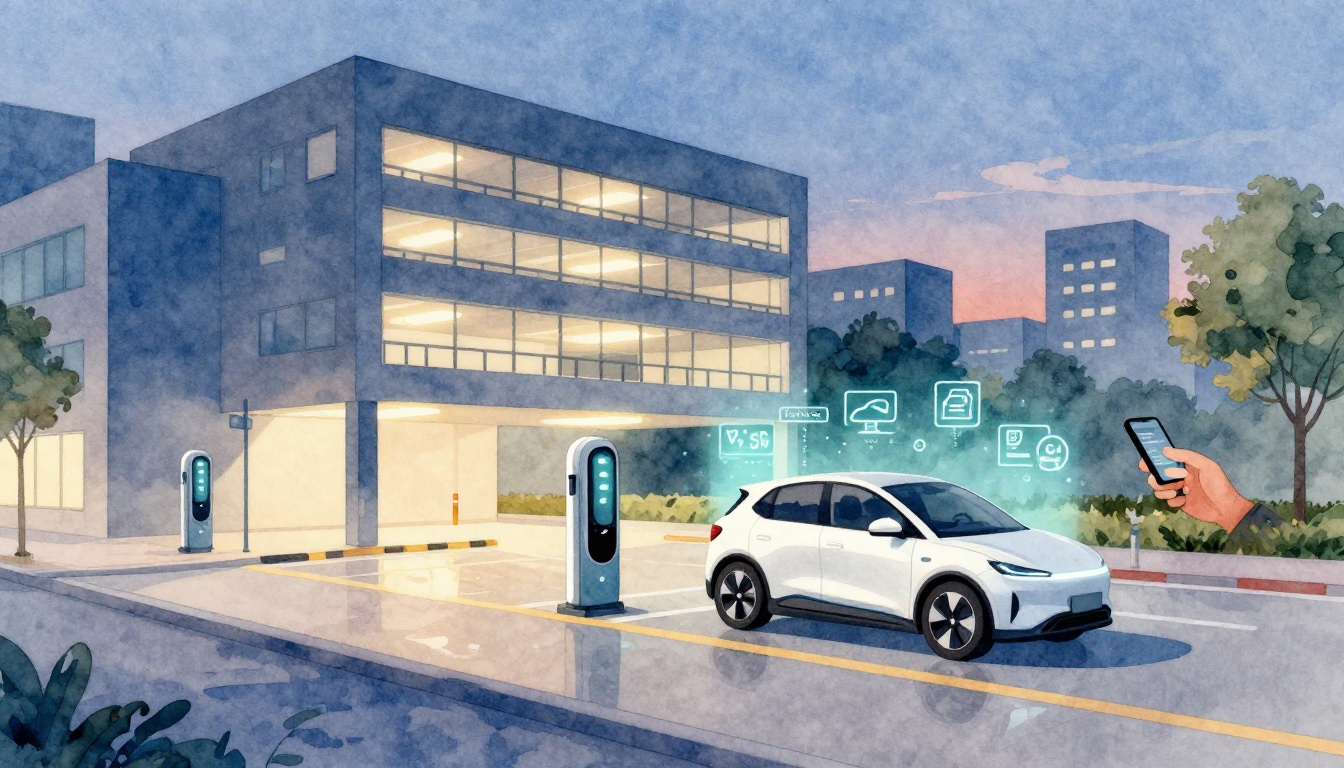
You know the feeling. You pull into a busy area, then spend minutes circling like you’re searching for a needle in a haystack. In 2026, U.S. city drivers reported that 66% waste up to 15 minutes hunting for a spot, and many get fed up fast. In fact, 54% switch to rideshares or buses just to avoid the hassle.
That frustration is pushing parking technology into a new phase. Instead of “maybe there’s a space,” you’ll see real-time availability, smarter entry, and pricing that reacts to demand. Meanwhile, apps and automation will make parking feel less like a chore and more like a service you request.
Here’s how parking systems are likely to change from smarter sensors to AI pricing, then to robot valets and greener charging towers.
Smart Sensors and Apps Guide You Straight to Open Spots
Smart parking systems start with a simple idea: if you know what’s open, you stop circling. So you’ll see more ground sensors, cameras, and IoT devices tracking which spaces are empty. Then the system sends that info to a phone app (or to a city dashboard).
In some U.S. cities, providers like INRIX have rolled out real-time parking data for more places over time, which helps apps and navigation tools show what’s available sooner. For a current example of this rollout, see Inrix adds real-time parking data.

The practical shift is this: parking guidance becomes more like live traffic maps. You don’t just get a “parking lot near you” suggestion. You get a spot-level direction.
Common features you’ll notice more often:
- Space detection using sensors that update as cars leave or arrive
- Live guidance that routes you to the closest available spaces
- Faster entry with automated gates tied to your vehicle
- Simple payments through apps or license plate recognition
And the benefits go beyond convenience. When fewer cars circle, you reduce congestion around busy blocks. Drivers also make fewer last-second turns and stops, which lowers stress during commutes.
Even better, these systems help parking operators too. With real usage data, they can spot patterns like “this garage fills by 9:10 a.m.” and adjust staffing or pricing accordingly.
How Real-Time Data Cuts Down on Endless Circling
Real-time sensors change the whole rhythm of parking. Instead of guessing, you get availability updates that keep pace with real arrivals.
Imagine pulling up to a downtown block. In the old world, you drive past rows and hope a spot opens. In the new world, your app can show a green icon for an available space a few blocks away. Then you can turn once, park, and move on.
That time savings matters. In 2026 reports, many drivers said parking search time is a major pain point, and lots of people still pick other transport options when parking gets too stressful. Real-time data helps because it reduces the “unknown time” part of the trip.
It also helps cities. Less circling means fewer small traffic waves near entrances and exits. Less congestion also means fewer emissions from stop-and-go driving.
So the future trend is clear: more parking spots will “announce” themselves as soon as they open. That makes the parking hunt shorter, and it makes the whole trip feel more predictable.
Paying and Entering Without Stopping Your Car
Smart sensors are only half the story. The other half is what happens at the gate.
In many next-gen lots, license plate cameras support automatic number plate recognition. Instead of pulling out cash or scanning a code, you roll in, and the system figures out payment and access.
In day-to-day terms, you’ll see two common upgrades:
- Automatic gates tied to your vehicle, so entry takes seconds
- Contactless payment so you don’t stop to pay or verify
Security also gets better. Automated entry can reduce missed scans and improve audit trails when something goes wrong.
If you’ve used driver apps for street parking rules or garage deals, the behavior will feel familiar. For example, apps like SpotAngels focus on finding options and staying on top of local parking rules. In the future, many drivers will expect the same level of help, but with more live space availability and smoother entry.
The result is a parking experience that feels more like “pull up and go” than “stop and figure it out.”
AI Predicts Crowds and Prices Spots Dynamically
Sensors tell you what’s open now. AI tries to answer a different question: what will be open soon?
In 2026 and beyond, parking systems will use AI to analyze demand signals. That can include events, weather, time of day, and how garages perform on similar dates. Then the system predicts crowding hours ahead.
A major upgrade here is dynamic pricing. When demand spikes, prices rise to reduce pressure on spaces. When it slows down, prices drop to fill gaps. It’s similar to how ride-share surge pricing works, but tailored to curb and lot capacity.
Companies already offer AI-driven and predictive pricing tools. One clear example is ParqEx dynamic and predictive AI pricing for parking, which describes how pricing can respond to demand, timing, and event conditions.

Dynamic pricing isn’t just about revenue. It’s also a traffic tool. If fewer drivers compete for the same spaces at the same time, garages can turn over more smoothly, and streets stay less jammed.
Operators also benefit from AI tools that help with planning. That can include forecasting maintenance needs, so gate issues and sensor problems don’t turn into a sudden bottleneck.
Spotting Problems Before They Snarl Traffic
AI gets useful when it starts acting early.
Instead of waiting for complaints, future systems can detect patterns like:
- Sensors that go silent or report odd data
- Zones that stay full longer than normal
- Entrance delays based on camera and gate timing
Then the system can alert operators before it becomes a bigger issue. For example, if a specific entrance gate acts up during peak hours, AI can flag the pattern so staff can respond quickly.
Think of it like a smoke alarm. The point isn’t drama. The point is fast action before the fire spreads.
When this works, drivers rarely see the problem. They just notice the parking experience stays smooth during busy times.
Self-Driving Cars and Remote Parking Reshape Garages
Self-parking today already feels like a preview. Many cars include advanced parking help that can manage tight maneuvers with less driver input.
In the near future, the big change is that vehicles will do more of the parking work on their own. Some systems already support remote parking features and autonomous parking assistance, and the direction is toward “drop-off then park itself.”
There’s also a growing interest in robot valet systems. These systems aim to park cars without a human valet walking between vehicles. If you want a focused view of that direction, see The Automated Parking Company’s look at valet robot systems.
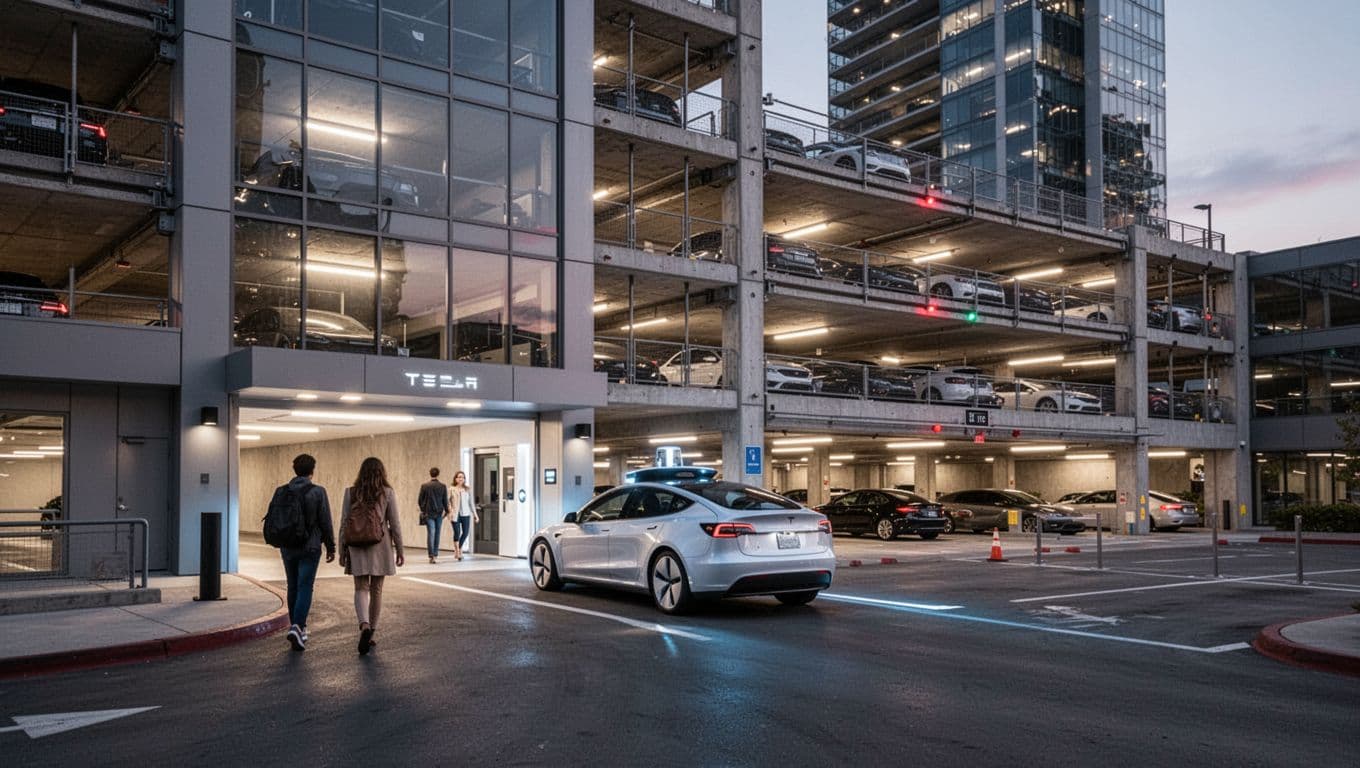
In a practical scenario, you might:
- Ride-share or drive to a garage entrance
- Step out while the car handles parking
- Walk to your destination, then return when your car is ready
That changes the space equation too. With automation, garages can fit cars tighter than traditional layouts.
From Today’s Self-Park to Tomorrow’s Robot Valets
Today’s self-parking helps you place the car. Tomorrow’s robot valet concept aims to take the whole parking task off your plate.
The first step is usually autonomy in confined areas. You drop off at a known entrance, then the vehicle handles the rest. Next, the garage can coordinate vehicles so they don’t block each other.
As more buildings add automated systems, parking becomes less about “which row can I squeeze into?” and more about “how fast can the system cycle cars?”
For many drivers, that’s the key benefit. It removes the hardest part of parking: the low-speed stress. No one wants to sweat through tight turns and inches of clearance.
Tighter Stacks Mean More Cars in Less Space
Cities can’t always expand land outward. So parking systems need to become more space-efficient.
Automated parking designs often focus on stacking cars vertically and moving them into place with machines. Depending on the system, it can increase capacity compared to standard garages.
The outcome is simple. You can fit more cars in the same footprint. As a result, cities might reduce pressure to add parking lots in prime areas.
Less sprawl can mean more room for walking, biking, and mixed-use development. Even if you never think about zoning, you feel the difference when the street looks cleaner and less crowded.
EV Chargers and Green Towers Fit Future Cities
Future parking systems will also support electrification. More drivers need a charger where they park, not just where they drive.
In 2026 and after, many new and updated parking areas include EV charging, especially in garages and multi-level structures. The big shift is that charging becomes part of the parking plan, not an afterthought.
For a broader look at charging trends expected to keep growing, see key EV charging trends and predictions.

A greener parking tower is not just about aesthetics. It’s about energy use. Some designs pair solar panels with battery storage to help manage power demand. Others aim to run chargers more efficiently during the day.
That matters because cities and operators will care more about total energy costs and load management. Smart charging systems can also guide drivers toward better charging times.
Charging While You Shop or Work
This is the most relatable change. You park, you plug in, and you do something else.
Level 2 chargers are often a fit for shopping centers and workplaces, because they match typical parking time windows. Faster charging also grows in importance, especially for travelers and turnover-heavy garages.
Over time, charging availability will also feel more like parking availability. Apps can show where chargers are open, and systems can predict queue times.
So parking gets tied to EV life in a more direct way. Instead of planning separate charging stops, you treat charging as part of the parking routine.
Cities Build Up, Not Out, for Smarter Space Use
EVs and smart parking fit well with one bigger planning shift: cities move toward shared capacity and more efficient building footprints.
That often means modular or automated structures. Towers can handle both cars and chargers, and they can integrate with city systems for better energy planning.
As streets lose some dedicated parking spaces, that land can support better mobility options. You don’t need a car spot every inch of curb if parking guidance routes drivers to garages instead.
By 2030, many urban areas will likely push for parking that supports low-emission goals and more predictable traffic flow.
Your Parking Future: Timeline from 2026 to 2030 and Beyond
From 2026 to 2030, parking systems will likely grow more automated in a few clear phases.
In 2026, expect wider use of sensor-driven apps, smarter gates, and more early AI forecasting. Dynamic pricing will expand in garages and busy districts, especially during events.
By 2028, many operators will coordinate pricing, space availability, and maintenance through shared data. Charging will spread deeper into garages, and app-based guidance will become more common.
By 2030, the biggest changes may be scale and coordination. Automated parking towers will appear more often. AI planning will run across larger areas, not just one lot.
Then after 2030, the trend points toward stricter energy standards, better energy storage use, and parking designs that aim for less waste and less street congestion. If self-driving adoption grows, remote and robot-valet parking can move from “demo” to “routine” in the right zones.
Conclusion
Parking systems won’t just get more tech. They’ll feel different. You’ll see apps that guide you to open spots, AI that predicts crowding, and entry systems that get you in faster.
On the far end, automation and self-driving features will shift parking from a stressful task to a service that handles itself. Then EV chargers will make parking more useful, not just more convenient.
If the hook was circling in frustration, the future answer is simple. Use today’s smart parking tools now, then watch for AV-driven garages as they roll into more cities.