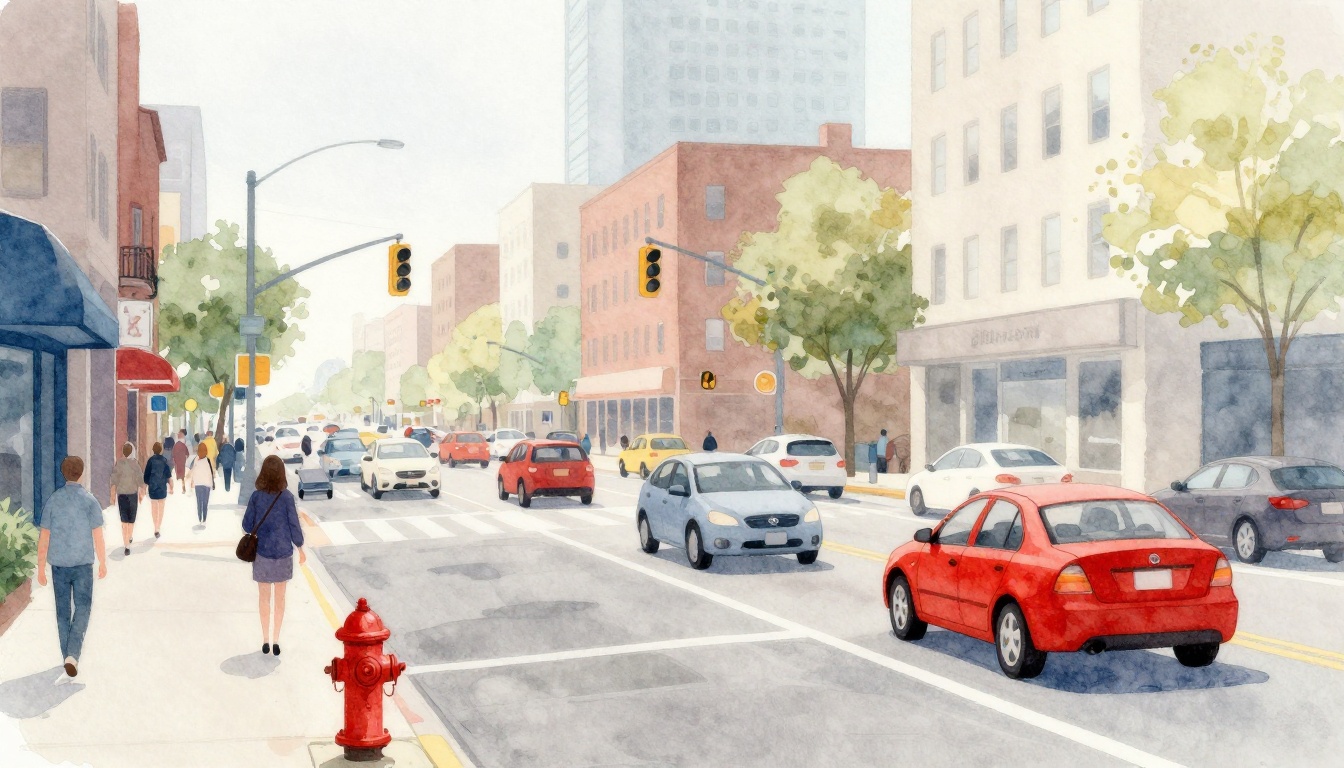
Ever sit behind an illegally parked car during rush hour and watch your commute crawl? It feels small, but that one bad stop can ripple through nearby lanes fast. When cars park in no-parking zones, block driveways, or take space meant for hydrants and sidewalks, traffic flow breaks.
Illegal parking isn’t just an eyesore. It forces drivers to slow down, squeeze into tighter gaps, and hunt for openings that shouldn’t be a problem. As a result, you get longer waits, more risky maneuvers, and higher crash risk for everyone sharing the road.
This happens in downtown corridors, near busy stores, and at intersections where timing matters most. Studies and city reports also point to the real connection between curb behavior and congestion, especially when drivers spend extra time circulating for parking. Let’s break down exactly how illegal parking affects traffic, why it can trigger gridlock, and what dangers it creates for drivers and pedestrians.
Why Illegal Parking Turns Roads into Slow-Moving Bottlenecks
On a busy street, lanes are like lanes in a bowling alley. If one lane suddenly narrows, the whole line of cars starts to bunch up behind it. Illegal parking does that job, even when the curb looks “close enough.” A car stopped in the wrong place can block a travel lane, reduce turning space, or block access to driveways and side streets.
Once that happens, drivers react in predictable ways. First, they brake earlier than they normally would. Next, they slow down to see if they can pass. Then, they creep forward to find a safe gap. That pattern turns a steady stream into stop-and-go traffic.
Illegal curb behavior also changes how drivers behave. People start scanning for a place to squeeze through, rather than following the normal rhythm of the road. You’ll often see cars hug the curb, straddle edges of lanes, or drift into adjacent lanes without signaling long enough. Even one extra “decision moment” per vehicle can create delays that keep growing.
That “lost time” adds up fast in downtown areas. One report on integrated curb management notes that roughly 30% of downtown congestion can come from drivers circling to find parking, and enforcement that reduces cruising can significantly cut that share. When illegal parking and blocked curb space increase the odds of cruising, congestion pressure rises.

Meanwhile, traffic flow models show that on-street parking can affect through traffic based on how space is placed and used. Research presented by transportation researchers at EPFL highlights that parking configuration and street conditions can shift queues and slow movement through key segments. In other words, it’s not just “more cars.” It’s the way parked vehicles reshape road capacity moment by moment.
So how do you spot bottleneck conditions early? Watch for these signs:
- A lane “disappears” near a curb because parked cars sit partly in travel space.
- Drivers brake in clusters, then inch forward in bursts.
- People repeatedly stop along the same block, not because of a light.
- Turn lanes get blocked, forcing straight-through drivers to reroute.
When these patterns show up, illegal parking often sits behind the delay. And because traffic backs up, the congestion doesn’t stay in one spot.
Narrowed Lanes Force Risky Passes
Illegal parking shrinks road space at the worst times. Drivers then weave to find room, sometimes stopping in uncertain gaps. The result is a cycle: less space, slower speed, more braking, then even tighter space ahead.
That’s why bottlenecks form so quickly. When the lane narrows, vehicles bunch up and speed drops. Even small gaps shrink too. If someone tries to squeeze past, they may cut off another driver who has nowhere left to go.
Spot-Hunting Drivers Add to the Chaos
After illegal parking reduces usable curb space, drivers spend more time searching. They circle, double back, or slow near intersections as if the curb suddenly became safe. That “spot-hunting” doesn’t just add cars to the area. It changes the flow patterns that usually keep intersections stable.
Over time, you can get a street that looks busy but moves poorly. That’s the bottleneck effect in action, and it sets the stage for gridlock.
How It Sparks Gridlock in Crowded City Spots
Gridlock doesn’t usually start with a dramatic crash. More often, it starts with a smaller failure: one blocked path that forces everyone to slow down together. Illegal parking can trigger gridlock in places where lots of people must move at once, like business districts, hotel rows, and areas near transit stops.
In these spots, timing matters. Pedestrians cross. Deliveries pull in. Buses need consistent lanes. Emergency vehicles need routes that stay clear. When a vehicle blocks a curbside access point, a crosswalk corridor, or an alley entrance, the blockage creates a “must-slow” condition for everyone nearby.

In Chicago, for example, city datasets and traffic safety reporting show how crashes cluster in dense areas and how local conditions matter. If curb access gets blocked near busy corridors, delays can cascade into intersections and back out to side streets. Even without a single “big” incident, blocked access can keep traffic from clearing, which is how gridlock spreads.
Bottlenecks at Key City Intersections
Intersections are where illegal parking hurts the most. A parked car can block a right-turn path, reduce sight lines, or block entry into a queue lane. Then drivers waiting at the light see fewer safe gaps. As a result, the intersection doesn’t clear when it should.
One-way streets can make this worse. When traffic moves in tighter corridors, there’s less room to absorb a lane reduction. Illegal parking can shrink the path for through traffic and delay every vehicle that depends on that flow.
Also, the problem isn’t limited to travel lanes. Blocked curb cuts and driveways can trap traffic patterns. Some drivers then cut through smaller gaps or double back, creating more pressure on the same intersection.
Emergency Delays That Cost Lives
Illegal parking can block paths for first responders. That might mean a hydrant gets covered, a fire lane gets blocked, or a route through the block gets narrowed just enough to slow down a response.
Emergency response is about seconds. If firefighters or paramedics need to route around a blocked path, their speed drops. Even a short delay can matter during a medical crisis or a fire.
So when you see a car parked where it shouldn’t be, treat it like a traffic safety hazard, not a minor inconvenience. It affects everyone, including people who can’t “wait it out.”
The Hidden Dangers Putting Drivers and Pedestrians at Risk
Traffic delays are bad. But illegal parking also raises safety risks. Parked cars create blind spots, reduce visibility for turns, and force people to move around obstacles at odd angles. That’s where collisions often start.
When you’re stuck behind illegal parking, frustration rises. Drivers then take risks they wouldn’t take on a clear street. A car that’s already impatient might change lanes fast, roll through a gap, or ignore safe spacing.
For pedestrians, illegal parking can be even more dangerous. A blocked sidewalk or curb zone pushes walkers into the street. Then they face fast-moving vehicles with fewer safe crossing options.

One safety fact sheet from the Network of Employers for Traffic Safety covers common hazards around parking, backing, and visibility. It highlights how blocked views can hide people and reduce reaction time, which is exactly what happens when illegal parking creates uneven curb lines and obstacles near crossings and driveways.
Blind Spots That Hide Pedestrians and Cars
A parked car can block the view of a pedestrian at a crosswalk. It can also block a driver trying to pull out from a driveway. When people can’t see each other clearly, crashes become more likely.
Blind spots also show up when drivers need to back out. Illegal parking near lots, apartment entrances, or corner curbs can force drivers to reverse with limited visibility. Then they depend on others to “fill in the gaps,” which leads to close calls.
Even if no one gets hit, these situations can spark sudden braking. That’s how rear-end crashes start, especially when traffic is already slowed by congestion.
Stress and Rage from Parking Fights
Illegal parking also triggers “parking fights.” People honk. Drivers argue. Someone double-parks “just for a second.” Another driver blocks them. Next thing you know, tempers turn into unsafe moves.
Parking stress doesn’t stay in your mind. It shows up in driving behavior. Drivers may tailgate, cut into gaps, or speed up to escape the line they’re trapped in.
For riders, pedestrians, and drivers, that’s a dangerous mix: reduced visibility plus unpredictable reactions.
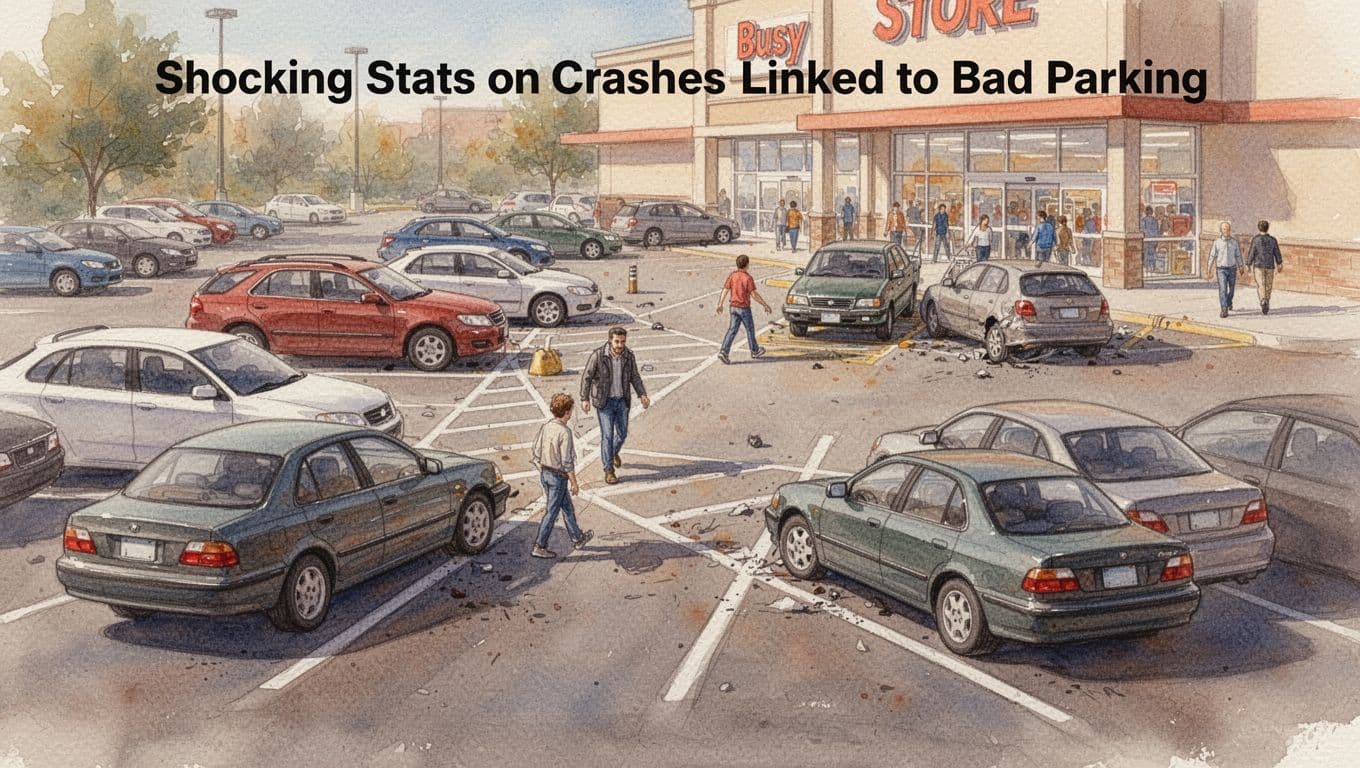
Shocking Stats on Crashes Linked to Bad Parking
Bad parking doesn’t just create delays. It creates conflict points, like backing zones, entrance lanes, and curb corners. Safety groups often break these crashes into categories such as street curb incidents, midblock collisions, and lot and driveway accidents.
Different studies and safety summaries offer different ranges, but they point to the same pattern: parking-related situations account for a large share of real-world crashes. The numbers below are commonly cited in safety and legal reporting, and the exact percentages vary by location and definitions.
Here’s a simple view of the kinds of crash shares people report:
| Crash area | Often-cited share linked to curb/parking issues |
|---|---|
| Urban streets (curbside parking-related) | 40% to 70% of accidents on streets from curb parking (range cited in safety summaries) |
| Midblock areas without bans | 19% to 75% midblock crashes (range cited in older but repeated research summaries) |
| Parking lots (vehicle crashes) | About 20% of all vehicle crashes occur in lots (often reported as tens of thousands yearly) |
| Pedestrian deaths tied to backups | Around 9% pedestrian deaths in some reported estimates |
| Entering or leaving spots | 5,000+ injuries reported in some safety compilations |
Those ranges are sobering because they map to what you see every day. Backing out. Squeezing past. Pedestrians stepping around stopped vehicles. Cars pulling into tight gaps.
For parking lots, multiple safety-focused resources describe how common and risky these crashes can be. For example, parking lot accident statistics and safety guidance discusses how parking lot crashes can be frequent and serious, especially when walkways and vehicle paths overlap.
In some city-focused reporting, Chicago is often used as an example of how street safety can be affected by curb behavior. For instance, illegally parked car accidents in Chicago discusses how illegally parked vehicles can contribute to crash situations there. Still, always treat specific percentages as “best available estimates,” since the facts depend on what’s counted and where.
The core takeaway stays the same: illegal parking creates more points where people and vehicles overlap. Those are the places where crashes happen.
Street and Curb Crash Percentages
Curbside issues often lead to collisions because they disrupt lane rules. Drivers may change lanes without enough space. Pedestrians may cross where they shouldn’t because the sidewalk becomes blocked.
Also, congestion reduces patience. When you’re forced to stop and start, small mistakes get amplified. A short gap becomes a bigger problem. A late brake becomes a bigger impact.
Parking Lot Horrors for Walkers
Lots have their own special risks. People walk between cars. Kids and shoppers don’t always look for reversing vehicles. Some drivers back out while distracted or while blocked by other parked cars.
When illegal parking blocks walkways, it forces pedestrians to step around obstacles. Then they walk closer to moving cars and turning vehicles. Backing accidents also spike when drivers can’t see around parked vehicles.
If you want a quick real-world test, ask this: would you let a friend walk the same route while cars reverse nearby? If the answer is no, that’s your clue. The parking layout and curb behavior aren’t safe.
Conclusion: Report It, Don’t Just Endure It
That rush hour bottleneck you hate starts somewhere, and illegal parking is one of the most common triggers. It disrupts lane space, worsens congestion, and adds unsafe choices for drivers. It can also put pedestrians in the street and slow emergency response when curb routes get blocked.
The strongest move you can make is to treat illegal parking like a safety issue. If you see a car blocking a hydrant, a sidewalk, or a travel lane, report it through your city’s app, hotline, or non-emergency line. Obey the rules when you park, too. Give delivery access, clear driveways, and keep crosswalk areas open.
Next time you get stuck behind an illegal curb stop, you’ll know what’s happening. The delay isn’t random. The road is responding to a blockage.
Have you seen a specific illegal parking pattern that caused near misses or long backups? Share your experience in the comments, and help other drivers spot the problem sooner.