Have you ever circled a block twice, only to realize your meter choice and your timing matter a lot? Maybe you’re late for a meeting, and you’re digging for coins like they’re a rare resource.
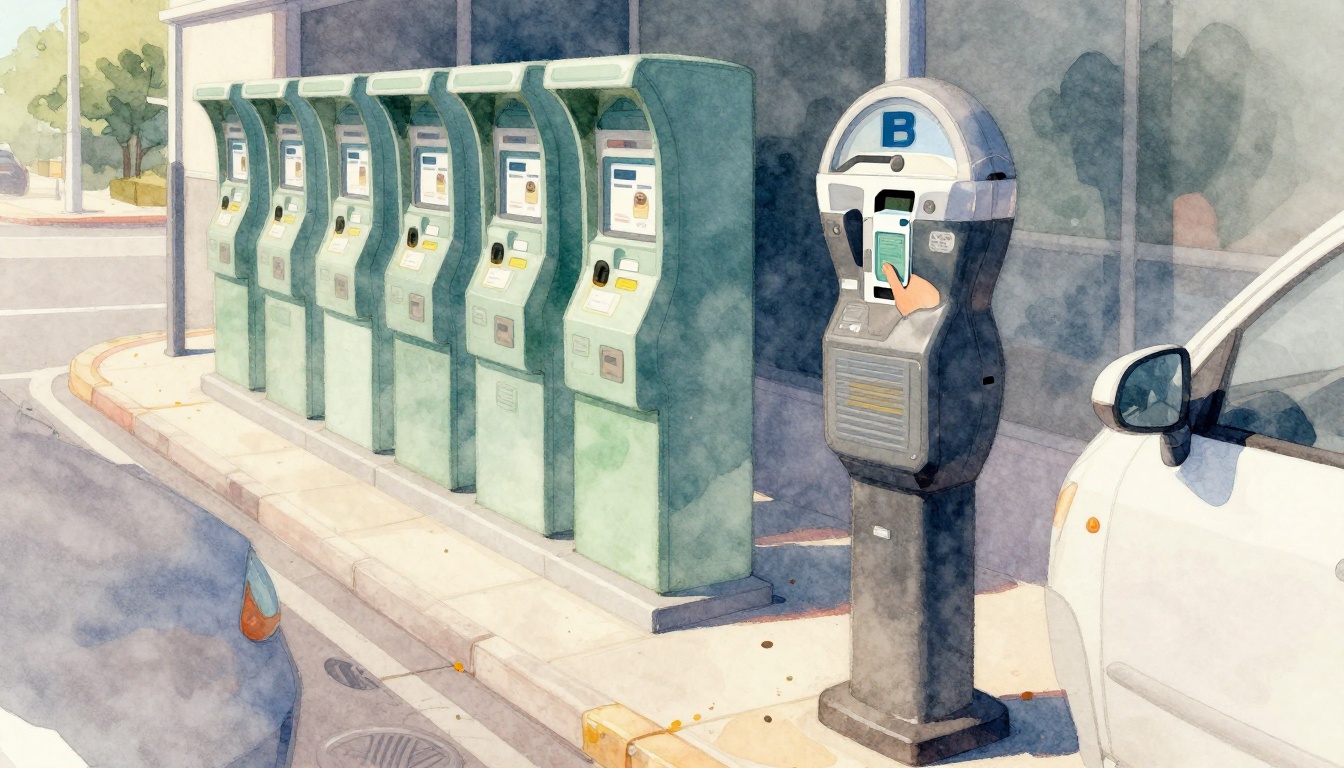
Parking meters and ticket machines keep things fair when curb space is limited. Single-space meters handle one spot at a time. Multi-space machines cover several spots, often with less curbside clutter.
Ever wondered why some meters beep and others ask for your license plate? This guide breaks down how each type works, how payments link to your car, and what to do when things go wrong. You’ll also see the 2026 trends shaping street parking in the US.
Mastering Single-Space Parking Meters: Coins to Cards
Single-space meters sit right next to your curb spot. They’re the “spot-specific” option, so you pay for time tied to that exact location. In many cities, enforcement teams can check the meter head, or they can confirm your session using your payment and the spot ID behind the scenes.
Traditional meters rely on coins. Smart meters use screens, and they often accept cards. Some even show more details like start and end times.
Here’s a quick look at the main difference:
| Feature | Classic coin meter | Smart single-space meter |
|---|---|---|
| Payment method | Coins only (usually quarters and dimes) | Coins plus card (insert, tap, or swipe) |
| What you enter | Time by turning a handle or selecting buttons | Time using on-screen prompts and buttons |
| Proof of payment | Often none, just the meter reading | Often a receipt option, plus stored transaction |
| How enforcement checks | Meter display at the curb | Cloud or handheld confirmation, plus optional receipt |
If you want a real-world example of how a single-space meter payment flows, this video from LA Express Park shows the basic steps at a single-space unit: how to make a payment at a single-space meter.
Step-by-Step: Feeding a Classic Coin Meter
With a classic coin meter, you’re basically “feeding” time into a mechanical or semi-mechanical counter. First, park where the signs say you can. Then, double-check the rate and the time limit.
Next, insert the allowed coins into the slot. Many coin meters don’t take pennies, because they’re meant for faster, cleaner counting. After that, you set your time. Depending on the model, you do this by turning a handle, pressing a button, or rotating a dial.
As you set it, you’ll usually see a countdown dial. It may tick down visibly, or it may display the time remaining. When the time runs out, the meter commonly beeps, flashes, or both.
One reason drivers get ticketed is simple: a few seconds matter. If you pause too long while setting coins, you might underpay by accident. Another common issue is a coin jam. If a wrong coin gets stuck, the meter might not register all the value.
Finally, remember that enforcement usually does a quick curbside check. They look at the meter’s display (or they verify the entry) and compare it to the posted rules. So even if you “meant” to pay, the meter has to show you paid the right time.
Smart Meters: More Ways to Pay Without Hassle
Smart single-space meters feel more like a small kiosk. Instead of a countdown dial, you get a screen with your rate, time options, and payment prompts. Most units accept multiple payment types. Many support contactless tap, which is fast when you’re parked in a hurry.
Here’s the typical flow:
- Park at the marked spot and check the signs for the zone.
- Tap your card or insert it, depending on the machine.
- Choose the time you want using the + or – buttons.
- Confirm the start, then wait for approval.
- Optionally grab a receipt if the machine offers one.
Some systems also give a short buffer, like a few free minutes. That helps when you’re loading groceries or stepping back to grab your phone. Still, don’t assume you can exceed the limit. If the machine says time is up, it’s time to move.
If you want another clear walkthrough of a smart single-space setup, this guide from IPS shows how an M7 single-space meter works: M7 single-space parking meter how-to.
One more detail: smart meters often store your transaction with the spot ID. So if you accidentally select a time and then cancel, you might still need to confirm you actually started the session. Look for the “approved” or “active” style message before you walk away.
Multi-Space Magic: Pay-and-Display and Pay-by-Plate Machines
Some cities don’t place a separate meter head for every spot. Instead, they put kiosks on poles or corners. One machine can cover multiple spaces, which reduces hardware clutter.
Two common types show up on US streets:
- Pay-and-display: you buy time at a kiosk and place a printed ticket on your dashboard.
- Pay-by-plate: you enter your license plate, and the system links payment to your car. Usually, no ticket goes on the dash.
These models exist because they cut down on curbside equipment. They also help when streets need lots of short-term parking.
Pay-and-Display: Get Your Ticket and Park Easy
With pay-and-display, you’re working through a small vending-style process. First, find the machine near the parking area. Look for instructions for which spaces it covers. Then, select your time and pay.
Most machines ask you for one of these:
- The space number, or
- The zone and time tied to that area.
After payment, the machine prints a ticket. You must place it face-up and clearly visible through the windshield. That visibility matters. If it’s inside a glove box, folded, or blocked by something on the dash, it might be treated as unreadable.
Here’s the key gotcha: people assume a receipt equals parking proof. It usually doesn’t. The enforcement rule is typically about the physical display ticket at the dash.
Also, tickets can fade in sun or get partially covered by papers. Before you leave the car, take a quick check from outside. If you can’t easily see it, you might be setting yourself up for a surprise.
Pay-by-Plate: License Number Does the Work
Pay-by-plate shifts the job from “ticket placement” to “license plate accuracy.” At the kiosk, you enter your plate exactly, including letters and numbers. Then you choose time within the allowed limits for that zone.
Once you pay, your session goes to a server system. Enforcement devices can then confirm whether a plate is active and paid for the current time window.
This approach also reduces some human error. You don’t have to print and display a ticket. You just need the correct plate.
However, mistypes can still cause issues. For example, swapping “O” and “0” or entering one wrong digit can link your payment to the wrong car record. That’s why a quick plate double-check is worth it.
For deeper context on how pay-by-plate meters function, here’s a useful explainer: how pay-by-plate parking meters work.
And if you want local details from a major authority, the Philadelphia Parking Authority covers pay-by-plate kiosks directly here: pay-by-plate parking kiosks: what you need to know.
| Feature | Pay-and-display | Pay-by-plate |
|---|---|---|
| Proof you show | Printed ticket on dash | Active session linked to license plate |
| Main input | Space number (and time) | License plate (and time) |
| Common mistake | Ticket not visible or face-up | Plate typed wrong |
| Enforcement method | Ticket check from street | Scan plate with handheld or device |
The bottom line for these machines is simple. Pay-and-display needs a visible ticket. Pay-by-plate needs an accurate plate.
Pay Your Way: Coins, Cards, Apps, and Special Deals
Parking payment options have expanded fast. You may see coins, card readers, mobile payments, and sometimes a phone number or short code for adding time.
At the curb, coins still work in many places. But most newer units push drivers toward cards and contactless tap. Apps are where the real comfort comes in, because they can add time and send reminders before your session ends.
Here are common payment methods you’ll run into:
- Coins: no change is usually returned, so exact coins help.
- Cards: insert, tap, or swipe at the meter or kiosk.
- Mobile apps: start payment remotely, then monitor time.
- Add time: extend a session without walking back to the curb.
- Reservations or events: some cities tie parking to a time window.
Some cities also offer short perks. For example, EV or hybrid drivers may see discounts or longer free windows. Some meters include a few free minutes to reduce “I arrived late by 30 seconds” tickets.
One practical tip: if you use an app, don’t assume sharing is smart. Most systems tie a paid session to your account and your plate. If you park for a friend, you still need the correct plate entry and the right zone setup.
Sensors and Enforcement: How Cities Keep Parking Fair
Meters and kiosks are only half the story. The other half is enforcement, and modern enforcement often connects curb hardware to sensors or cloud records.
Many cities want to reduce repeat offenders. So they use methods that confirm whether your car is actually there and whether you’re truly paid for the current time window.
Some systems also use ground sensors or similar detection. These can detect when a car arrives and leaves. When that happens, leftover unpaid time can stop. That makes it harder for drivers to “share” or “reserve” time.
For a clear explanation of one sensor approach, INRIX discusses how ultrasonic sensors detect parking availability: ultrasonic sensor parking availability technology.
Meanwhile, many cities use dynamic enforcement. That can mean handheld scanners, phone cameras for tickets, and quick plate checks.
The simplest takeaway: your payment must match the spot and the time. Tools can check either the meter head or the plate record.
Smart Sensors That Watch Your Spot
In-ground sensors can work like a “spot heartbeat.” When a car pulls in, the system detects the change and can mark the spot as occupied. When the car leaves, it updates again.
Because of that, the system can behave more fairly. If you paid for time and then leave early, it may stop the session based on occupancy. In some areas, unused time can cancel automatically.
This also helps with turnover. Street parking is meant for short stays. Sensors support that by keeping occupancy tracking closer to reality.
What Parking Officers Really Check
Most enforcement checks boil down to three things:
- Time match (is the meter or session active for now?)
- Proof visibility (if you printed a ticket, is it readable?)
- Identity match (for pay-by-plate, does the plate match the record?)
In pay-and-display zones, officers check the dash ticket from the street. In pay-by-plate zones, officers scan plates with handheld devices or cameras.
For app-based parking, the system is supposed to reflect your paid session immediately. Still, delays can happen if the network connection is weak. That’s why it helps to confirm “active session” in the app right after you pay.
Ditch the Drama: Fixing Meter Glitches and Future Trends
Parking systems aren’t perfect. Machines can go offline. Buttons can stick. Readers can fail. When that happens, knowing the right response can save you from a ticket.
First, try not to walk away assuming it worked. Watch for confirmation. Then, take quick photos if you spot an issue. It sounds tedious, but proof helps if you need to report a problem.
Also, always follow the signs. If a zone changes by block, the meter might still look the same. The pricing and limit can vary.
Quick Fixes for Broken Meters and Errors
If a meter won’t accept coins or cards, many places offer a process. Some require you to pay a nearby working machine in the same zone. Others ask you to call a help line on the meter for resolution.
If only one method fails, try the other method if it’s offered. For example, if tap doesn’t work, try insert. If both fail, you may need to report the issue right away.
If you type a plate for pay-by-plate, verify it before you pay. Mistypes create the hardest fixes because the payment can get linked to the wrong vehicle record.
For pay-and-display, confirm the printed ticket is correct and placed outside properly. Don’t rush into leaving right away. A 10-second dash check can prevent most ticket surprises.
2026 Innovations Reshaping Street Parking
In 2026, street parking keeps moving toward fewer steps. Pay-by-plate continues to grow because it removes the “ticket placement” step. It also reduces errors that happen when tickets are hidden or unreadable.
You’ll also see more app-led parking. More cities want drivers to manage sessions from a phone, with alerts before time expires. That reduces late tickets and cuts down curbside backtracking.
At the same time, sensor-backed enforcement continues to improve. When systems can tell whether a car is actually on-site, it helps reduce misuse of shared time.
Finally, contactless payment keeps expanding. Card taps are faster than coin feeding. In busy districts, that speed matters.
Conclusion
Parking meters and ticket machines work best when you treat them like a simple machine with one job: match your time to the spot or plate. Classic coin meters count down from coins. Smart meters guide you through payment on a screen. Multi-space kiosks either print a visible ticket or link your session to your plate.
When you understand the flow, you avoid the most common mistakes: unreadable tickets and plate errors. You also handle glitches faster, because you know what to check before you walk away.
If you’ve had a “beep then ticket” moment, share what happened. What kind of meter was it, and what solved it for you?