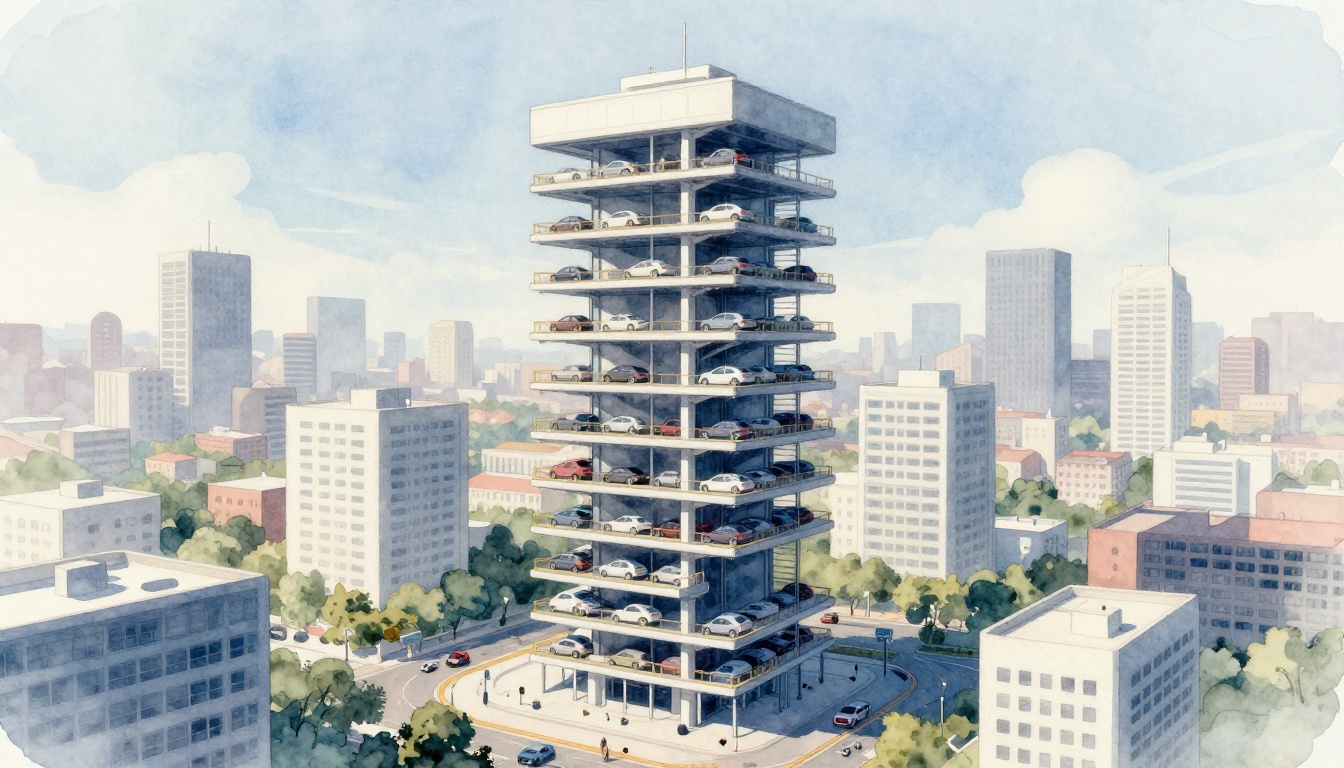
Picture this, you’re stuck in stop-and-go traffic, circling the same block in New York because the street lot is full again. In 2026, a growing number of drivers are switching to multi-level parking because it stacks cars like a smart machine instead of spreading them across land. In short, that’s the core idea behind how multi-level parking systems work: they move your car up (or along) to a slot, then bring it back when you’re ready.
If you’ve ever hunted for parking in Tokyo or another dense city, you know the pain. Space costs a fortune, and time drains fast while you look for an open spot. These systems solve both problems by packing far more vehicles into a smaller footprint, often without the usual walking and circling.
Most designs follow a simple flow. You enter, the system takes over, and your car is stored on a platform, lift, shuttle, or tower slot. Then you retrieve it using a button, card, or app, so you can move on with your day.
Next, you’ll see the key parts that make it work, then learn the six main types (from stackers to puzzle towers) and the real pros and cons you should expect, including recent 2026 updates.
Core Components Powering Every Multi-Level System
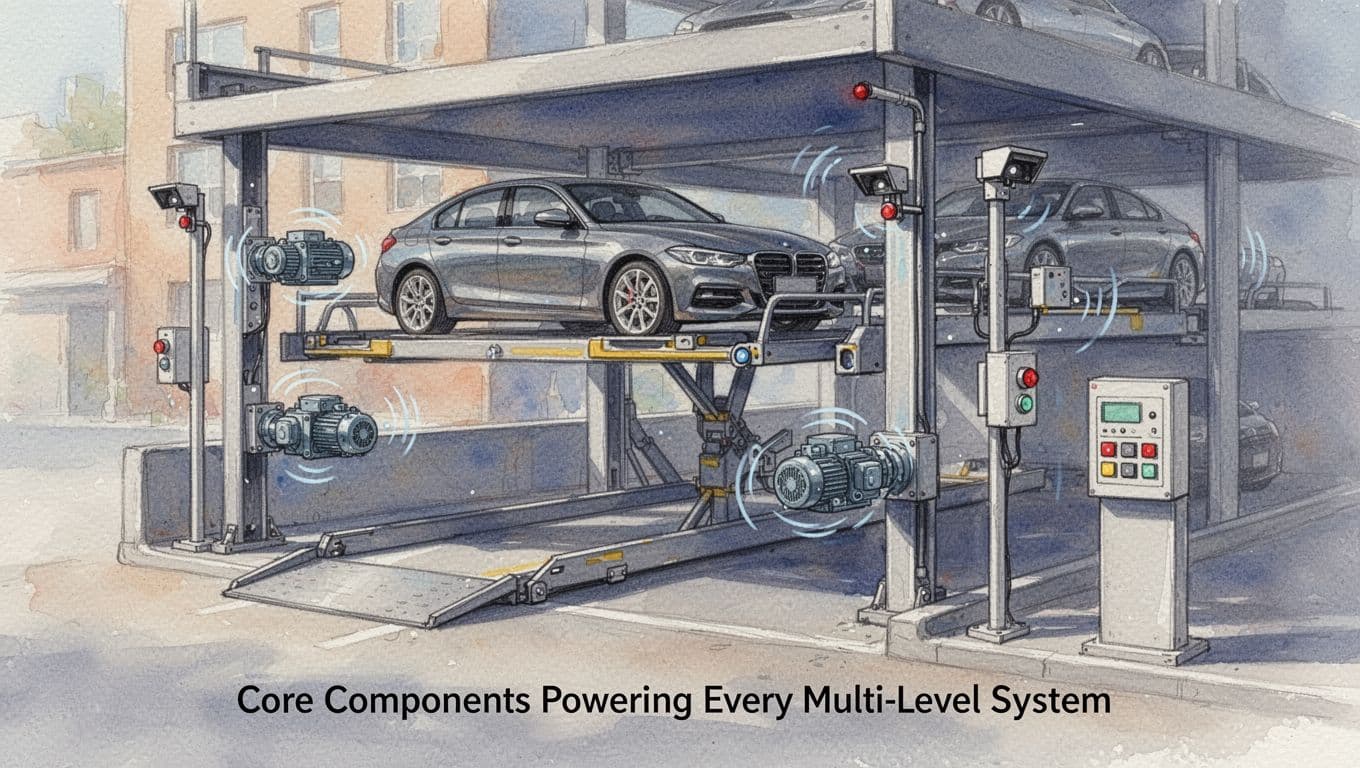
Multi-level parking systems work because three layers team up: car support, car movement, and smart safety. Think of it like an elevator plus a careful robot helper. Your vehicle goes onto a platform, the system shifts it to the right spot, and sensors keep everything aligned and locked down.
Even though designs vary by type, the building blocks stay familiar across most installations. You will find platforms that hold your car, lifts or drives that move it between levels, and controls that decide what happens next. Most importantly, safety parts stop motion if something looks off.
The “car support” layer: platforms, pallets, and lift cradles
Every multi-level system needs a dependable place for your car to sit. That job falls to a platform, often called a pallet, cradle, or vehicle deck. It supports the car’s weight and helps the system position the tires and frame the same way each time.
A good support layer does more than hold weight. It also spreads force evenly to protect the structure, and it keeps the car stable while the system moves. In many designs, the deck connects to the moving part through beams or rails, so the car rides smoothly instead of bouncing.
You can picture it like a loading dock. If the dock flexes or shifts, the forklift can’t work safely. Similarly, if the platform tracks poorly, the parking system struggles to lock the car in place.
Here are common support components you will see:
- Vehicle platform or pallet: The part your car rests on during storage and retrieval.
- Lift cradle or support beams: Reinforce the platform and guide it during travel.
- Guides and stops: Help the wheels land in the same spot every cycle.
- Drainage and surface plates: Manage water and keep traction steady in daily use.
The “movement” layer: lifts, shuttles, conveyors, and drive motors
Next comes motion. This layer moves the car from the entry level to the correct parking position. Depending on the system, movement might be vertical (up and down), horizontal (side-to-side), or a mix of both.
Many installations use hydraulic lifts or electric drives. Hydraulic setups excel at lifting heavy loads with smooth control. Electric drives often handle sliding or rotating motions using motors and gearboxes. Either way, the goal stays the same: move with precision, then hold with stiffness.
In systems with shuttles or carriers, drive motors push or pull the moving unit along rails. In other layouts, platforms travel on vertical stacks like elevator stages. Some designs add transfer units that rotate or reposition the car, similar to a valet lane that “hands off” to the next motion stage.
Also, motion isn’t just about speed. It’s about repeatability. If the platform reaches the slot with a consistent stop, the system can reduce wear on guides and improve safety.
The “smart safety” layer: sensors, interlocks, and monitoring
Now comes the part that keeps passengers, property, and equipment safe. Multi-level parking systems use sensors as their eyes and interlocks as their hands.
Sensors typically measure things like:
- Car presence at the entry bay or on a platform
- Car position relative to a slot
- Alignment signals that confirm the vehicle sits correctly
- Movement status (for example, stopped, moving, or locked)
These signals flow into a central control unit, which decides the next action. If a sensor reports a mismatch, the controller blocks the move. In other words, the system does not “guess.” It checks, then acts.
Interlocks and locks add the physical side of safety. They can prevent lifting or travel until the car is fully staged. They also keep platforms from drifting when the car is stored. If the system detects a fault, safety logic can park the motion in a safe state.
For an example of how core parts like entry terminals and sensor frames fit into a robotic parking setup, see Robotic Parking System Components.
The best safety feature is simple: the system stops when it cannot verify position.
The control layer: commands from entry to retrieval
Even if the mechanics are strong, the system needs a decision maker. That role sits in the control system, sometimes described as a PLC (programmable logic controller) or a controller cabinet.
The control layer handles tasks like:
- Booking the next available slot
- Planning the move sequence (first stage, then transfer, then final placement)
- Monitoring sensor feedback during motion
- Logging faults for maintenance teams
From a driver’s view, the process feels quick. You enter, scan a ticket, tap a card, or use an app. Then the system assigns space and guides the flow through entry and exit points.
However, behind the scenes, it’s closer to an elevator ride with strict rules. The controller must coordinate multiple movements so only the right parts move at the right time. Otherwise, collisions become possible, and wear goes up.
In 2026 upgrades, many operators focus on smoother status updates and better fault handling. The aim is simple: keep retrieval fast, even during busy hours.
How all components work together (a real-world flow)
To see the team-up, follow one cycle. First, your car enters the entry bay. Sensors detect the vehicle and confirm readiness. The controller checks which slot can take your car safely.
Next, the movement layer starts the job. A lift raises the pallet or a shuttle slides the carrier into the correct lane. Motors move in controlled steps, while guides keep the car on track.
Finally, the safety layer verifies the car’s final position. Locks engage so the platform can hold steady. When you return to retrieve your car, the controller reverses the steps until the vehicle reaches the entry level.
This coordination is why systems can park so many cars in tight cities. They avoid long walks because the car comes to you. Also, they reduce driver waiting because the system manages the flow instead of relying on luck.
For broader design and safety context, you can compare approaches in Multi Level Car Parking: Types, Design, Safety and Cost.
Puzzle Systems: Shifting Platforms Like a Giant Sliding Puzzle
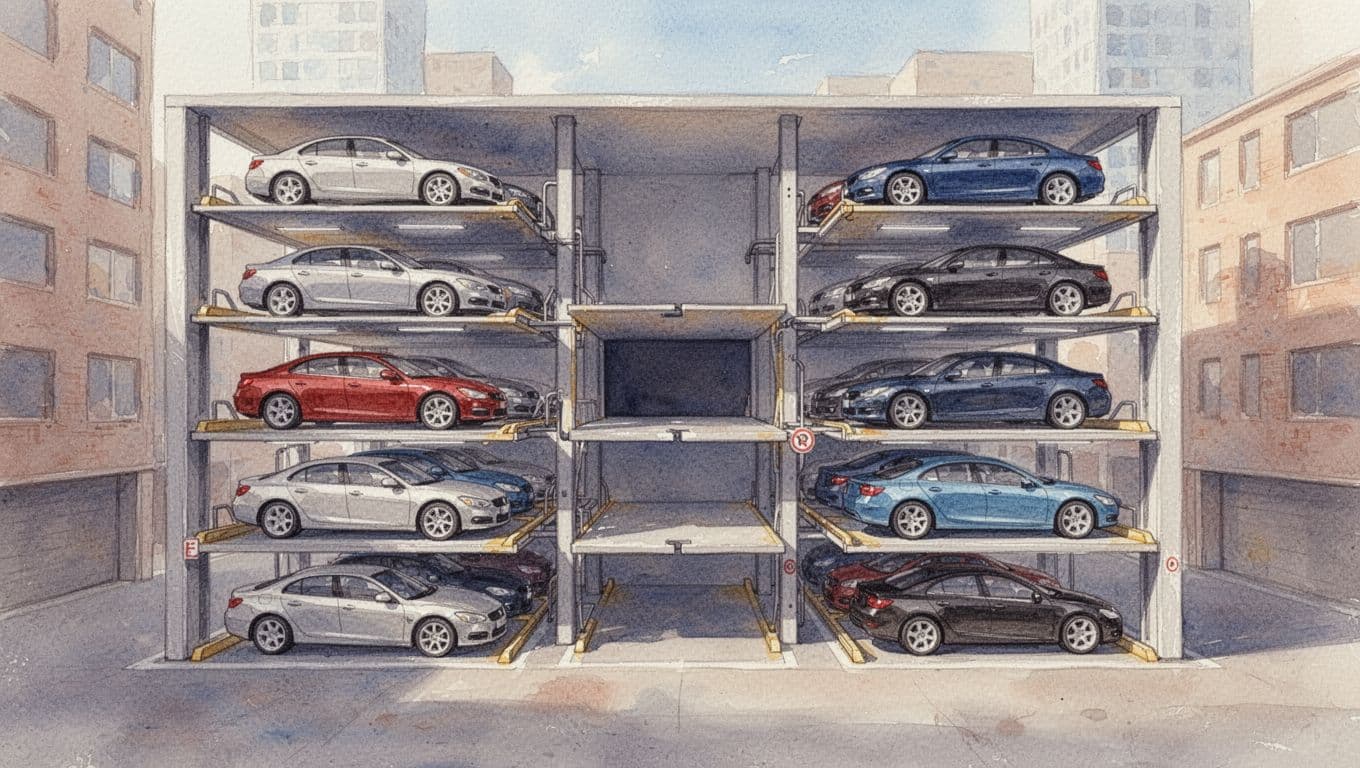
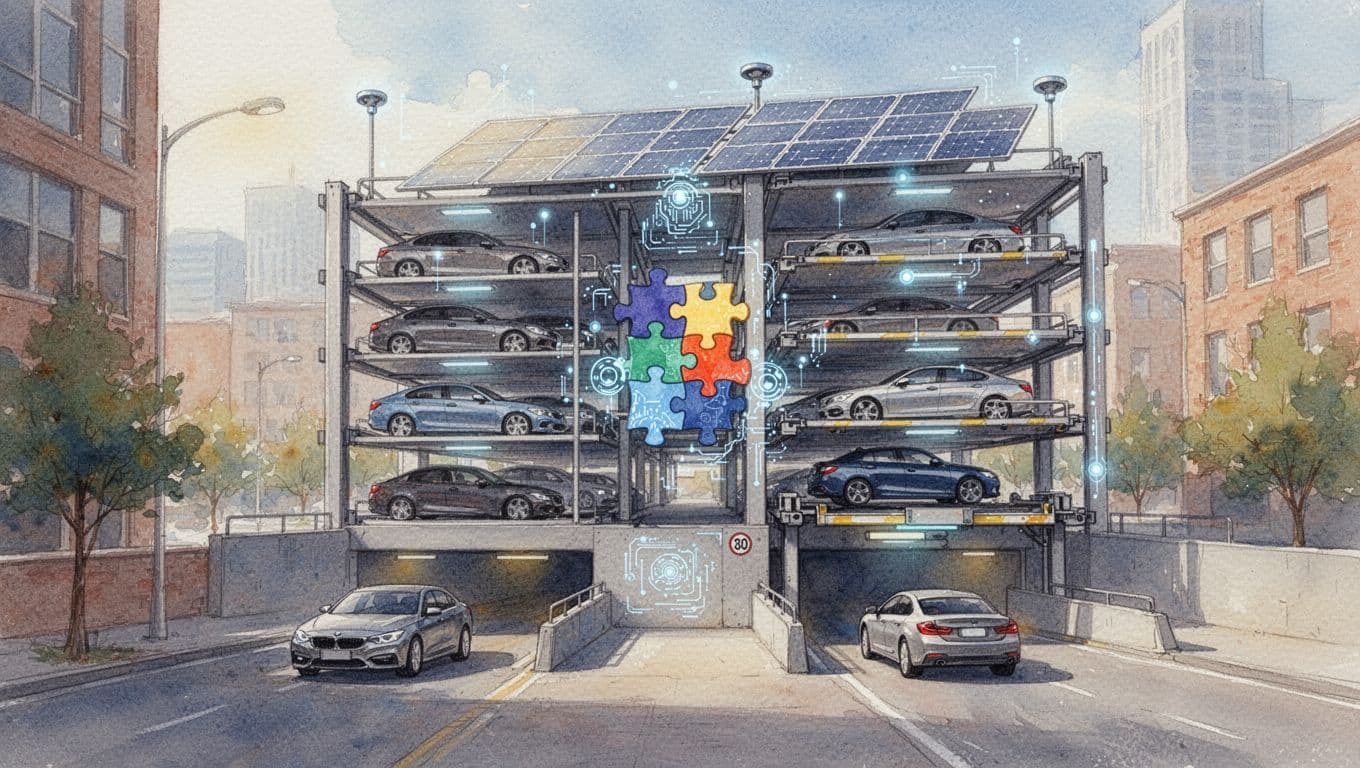
Puzzle parking systems feel almost magical at first. You roll in, then the machine shuffles platforms around like a giant sliding tile puzzle. In other words, the system does not “hunt” for space like you would in a crowded garage. It creates the space first, using a planned pattern of moves.
Most puzzle designs use synchronized lifts and sliding platforms. A controller tracks every platform, slot, and travel path. Then, during parking, the system shuffles your car into position. During retrieval, it runs the steps in reverse, so you get your spot back without waiting for someone to move another car.
A simple analogy helps: think of a puzzle board that needs one blank tile. Puzzle parking uses that same idea with one “void” spot. When the void shifts, the other platforms can slide into new positions. That one move unlocks the next move, and soon you have a full parking pattern.
How puzzle systems work (the “void spot” move)
Here’s the core operation in plain terms. First, you park your car on the ground platform. Next, the software starts moving other platforms to make room. It shifts cars left, right, and up and down in a controlled sequence. That sequence always depends on having one empty spot, or void, in the grid.
When the system needs to reposition platforms, it does it in steps. Usually, it shifts one platform into the void, then repeats the pattern. Because every move follows a known path, the system keeps cars aligned with the right bay. Safety sensors confirm each position before the next step begins.
This is also why retrieval often stays fast. Since each parking position can become “accessible” again by reversing the same sequence, your exit does not require a chain reaction. In many setups, you can retrieve independently without moving other cars first.
If you want a clear breakdown of what puzzle parking means and how it works, see Puzzle Parking: What It Means and How It Works.
Key components you’ll find in a puzzle parking layout
Puzzle systems rely on a few core mechanical parts, plus sensors and controls. Without those pieces working together, the grid would not stay accurate during repeated cycles.
The main components usually include:
- Pallets or vehicle decks to support the car during storage.
- Hydraulic lifts to raise platforms between levels.
- Sliding motors to move platforms horizontally across the grid.
- Sensors and limit switches to verify platform position.
- A keypad, remote, or access code for entry and retrieval.
Each component plays a clear role. The pallets hold the car. Lifts handle vertical motion. Sliding motors handle lateral motion. Meanwhile, sensors act like your eyes, confirming every step.
The control software coordinates everything too. It checks whether a slot is free, then plans the move sequence. After that, it runs the sequence while safety systems monitor for misalignment.
Pros and cons (when puzzle parking shines and when it doesn’t)
Puzzle systems can save a lot of space, especially in tight urban sites. In practice, many installations reach multiple levels, which helps owners fit more vehicles than ramps alone. Another big upside: many designs do not need as much staff time. You drive in, the system stores your car, and you retrieve it later with your code.
Still, there are tradeoffs you should expect. The “void spot” requirement means the system always needs the right grid condition to run a full shuffle cycle. If the system is busy or multiple moves queue up, you may feel some wait time.
Here are the most common practical pros and cons:
- Pros: strong space savings, typically up to several levels, works indoors or outdoors, and often needs minimal staffing.
- Pros: independent retrieval patterns in many designs, which can reduce “who moved whose car” stress.
- Cons: retrieval may slow during peak usage because the system must run scheduled sequences.
- Cons: the design depends on a working grid pattern, so it can be less flexible than simpler lifts.
For an example of puzzle vertical lift systems used in real projects, you can review Rethinking Parking with Puzzle Vertical Lift Systems.
Real-world fit: apartments and condo parking
Puzzle systems fit best when you need higher capacity in a footprint that already feels too small. That’s why they show up in places like apartments, condos, and small commercial sites. In many buildings, a puzzle system turns underused areas into real parking inventory.
They also match how residents live. You want a predictable experience, not a valet line. With puzzle storage, you typically park your car, then enter your retrieval code when you’re ready. In many installations, the cycle time stays in the range drivers can handle, often around a minute depending on the queue.
If you’re planning a condo building, think of puzzle parking as a way to “buy back” land. Instead of spreading cars across ramps and long lanes, you stack and rearrange. That can help developers reclaim space for other needs, like walkways, landscaping, or retail units.
One more helpful image idea can make this concept click for readers. In a diagram, show a small grid with one empty tile. Then animate a platform sliding into the void, followed by the next shift. It looks like a board game, but it’s how the system stays organized under real garage conditions.
For deeper design context, you can also look at Puzzle Parking – Fully Automated Multi-level Car Parking.
Pros, Cons, and Smart Choices for Your Needs
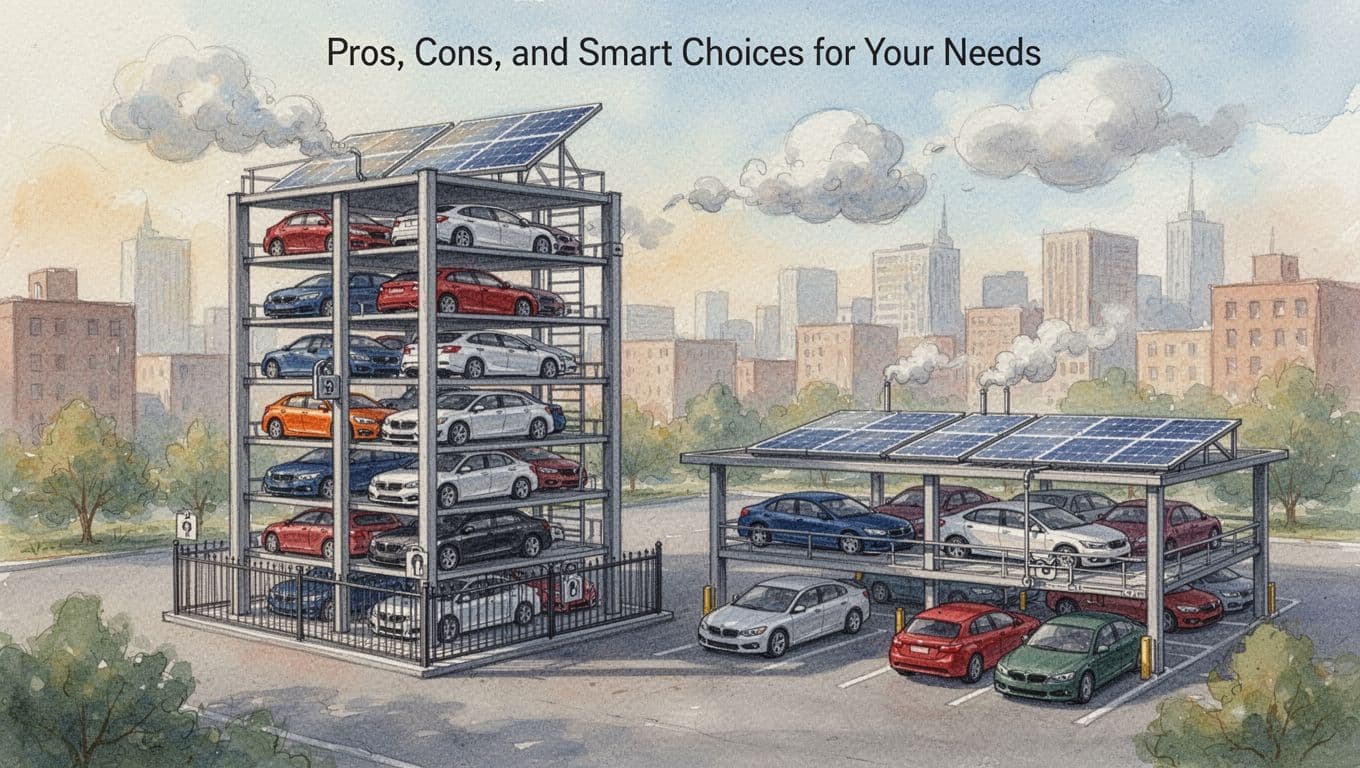
Choosing a multi-level parking system feels a bit like picking the right tool for a job. You want the one that fits your site, handles your daily rush, and does not add headaches after install. Below, you’ll see the main pros and cons that matter in real projects, plus a quick comparison table to help you decide.
What you gain (and what you should expect to pay)
Multi-level parking systems tend to shine because they solve two pain points at once: land use and time loss. When fewer cars need ramps and long aisles, owners often reclaim space for revenue or open areas. In 2026 builds, many designs also support EV charging and tighter access control, which improves both convenience and security. For broader background on costs, see multilevel parking system cost guidance.
Here are the strongest benefits most owners care about:
- Higher capacity per footprint so you can fit more cars without expanding the site.
- Less circling because the system manages parking, not luck.
- Lower energy use over time since you reduce idle driving and repeated vehicle handling.
- Improved security because vehicles move inside a controlled process with cameras and access rules.
- Smaller site impact since fewer ramps and fewer rows can reduce construction bulk.
Still, the trade-offs come fast. Budget matters up front, and operational fit matters after. If your access times are short and your queue is long, some systems can feel slower during peak periods. Also, heavy use means you need strong maintenance planning.
The smart choice starts with your daily traffic pattern, not just your total parking count.
A quick comparison table for real decision-making
This table helps you match your site goals to common system styles. It focuses on the outcomes you’ll feel as a driver and the costs you’ll manage as an owner.
| System type | Space saved | Speed (typical experience) | Cost level | Best for |
|---|---|---|---|---|
| Puzzle | High | Medium to fast (when timed well) | Often mid | Apartments and condo parking |
| Rotary | Medium to high | Fast for high turn flow | Often mid to high | Locations with enough vertical room, like some basements |
| Tower/stacking | High (vertical density) | Fast for single-entry patterns | Often mid to high | Sites that can handle fixed workflows |
| Fully automated systems | High | Often fast with good scheduling | Higher | Mixed-use sites that need tight flow control |
If you want a developer-friendly look at choosing systems versus a traditional garage, check APS vs traditional parking garages.
Smart choices by site conditions (so you avoid regret)
Before you pick a system, map your constraints to the system strengths. Two factors usually decide everything: available footprint shape and arrival pattern.
First, think about your footprint. If you have tight space and consistent parking demand, puzzle-style layouts often work well. If your basement or vertical structure already supports round or staged motion paths, rotary can fit. When you need predictable throughput for many entries, fully automated options usually deliver the best control.
Next, check your user profile. Residents who park once and retrieve later often tolerate medium retrieval variability. Businesses with short visits need quicker cycles and strong queue handling.
Finally, treat “total cost” as more than install price. Ask about power use, planned service intervals, and what happens during peak events. In practice, the better fit usually saves money twice: once in construction and again in daily friction.
Real Examples and Exciting 2026 Developments
If you want to understand multi-level parking systems, real installs do more than any diagram. They show how the mechanics and control logic work together under daily pressure, rush hours included. They also reveal what’s changing in 2026, because the biggest upgrades target two things drivers feel every day: waiting time and energy use.
You can think of modern parking like a well-run airport shuttle. The car still “rides” the system, but the scheduling, routing, and safety checks get smarter so you spend less time idling at the gate.
Real multi-level parking installs in the US
In the US, automated systems increasingly show up in mixed-use projects, because developers want more spaces without expanding the building footprint. One visible example is Utron’s automated parking at UCLA, designed to add capacity while keeping the site compact. You can see the project details here: UCLA automated parking by Utron.
Another US example shows how these systems fit real downtown buildings. Utron also reports an automated install at 916 Garden St, a project that illustrates how multi-level storage can work when parking needs are dense and access must stay controlled. For more background, see 916 Garden St automated parking by Utron.
These installs tie back to core system behavior. The controller books slots, the movement layer stages the car, and sensors confirm position before the next motion step. That loop is why automation helps, even when the site layout gets tricky.
2026 upgrades you’ll actually notice as a driver
The 2026 story is less about flashy hardware and more about smarter decision-making. Operators want shorter queues, fewer failed retrievals, and less wasted motion.
Here are the practical 2026 shifts showing up in the field:
- AI-based wait-time reduction: smarter prediction of busy periods helps allocate slots and routes sooner.
- Better robotics scheduling: automated sequences run with tighter timing, which reduces “idle” movement between stages.
- Solar-powered lift and park power: some new builds pair solar generation with LED lighting and EV charging.
- Improved fault handling: when a sensor flags an issue, the system isolates the problem faster.
In plain terms, the system feels more like a train schedule. You still enter, store, and retrieve, but the control layer plans better so you do not sit in limbo.
A helpful way to visualize this is to connect it to the system workflow you saw earlier. When AI predicts demand, the controller can prepare the right platforms and lifts before you arrive. Then sensors confirm staging, so retrieval does not stall mid-cycle.
Underground and high-capacity installs (15 levels and beyond)
Underground builds are where multi-level parking gets serious. When land is scarce and rules are strict, systems stack capacity without turning the street into ramps and switchbacks.
In Europe and parts of Asia, underground installations can reach very high depth levels, sometimes up to around 15 levels in hybrid designs. The same theme holds worldwide: the movement layer and control layer must coordinate long travel paths reliably, and the safety layer must verify position every step.
That’s also why system choice matters more than ever. Puzzle layouts can be space-efficient, while shuttle-and-rail designs can keep motion predictable across many bays. Meanwhile, stacking towers can add capacity vertically when the site supports the fixed workflow.
India and APAC examples that show the “right fit” for tight cities
In dense cities, automated parking often grows fastest where traffic congestion and land cost squeeze every development. India has become a major testing ground for these systems, including puzzle parking and automated towers.
For an India-focused look at automated car parking systems, Wipro PARI shares project experience and design approach here: Automated car parking systems by Wipro PARI. You can also find coverage of recent automated complex openings in India through news reporting like India’s first automated parking complex in Hyderabad opens tomorrow.
These examples matter because they prove what theory can’t. In real operations, the system must handle varied driver behavior, different vehicle sizes, and daily peak surges. The controller’s booking logic and sensor feedback do the heavy lifting in those moments.
Europe and mixed-use hubs where parking meets sustainability
In Europe, the trend often blends automation with stricter sustainability goals. Operators look for systems that reduce ramp travel, cut idle movement, and support EV charging where possible.
Even when the mechanical system stays familiar, 2026 adds a new layer of energy thinking. Solar power on rooftops or park canopies helps run parts of the electrical load, while efficient drives reduce energy use per stored vehicle.
If you want a wider look at the market signals behind these changes, you can explore reports like Automated parking system market analysis. Market reports are not the same as project specs, but they help explain why new installs keep expanding.
Where growth is likely next: mid-size lots that feel “too small”
Here’s the pattern that keeps repeating: growth does not stop at big downtown towers. It also moves into mid-size lots, like offices, apartment blocks, and mixed-use parcels that are too tight for traditional ramps.
Operators like these sites because systems can scale in modules. You can start with a workable capacity, then expand if demand rises. That lets owners avoid overbuilding upfront, while still gaining the core benefit: more cars in less footprint.
As robotics cost drops, more developers can justify automation beyond the biggest skyline projects. Expect more mid-size installs where the math works, especially when the site has a clear entry-and-exit flow and predictable parking demand.
Conclusion
Multi-level parking systems work by combining solid car support with precise car movement and smart safety checks. From entry to storage to retrieval, the control system coordinates lifts, shuttles, or puzzle-style shuffles so your car ends up exactly where it should. Because the system plans moves instead of relying on luck, it cuts circling time and makes better use of tight land.
The strongest takeaway is simple: the right system depends on your daily demand and site limits. Choose based on how vehicles arrive, how fast people need to exit, and how many spaces you must fit per footprint. That decision helps you get the capacity you want without turning the parking area into a bottleneck.
Ready to make a smarter pick? Share what you struggle with most (long waits, cramped space, EV needs, or access control), then check local facilities that use systems like puzzle, rotary, or fully automated parking. What feature would make parking feel painless at your location right away? As these designs improve in 2026, cities get more space back for people, not ramps.